[Bonus preview episode of Conversation from the Crossroads for paid subscribers.]
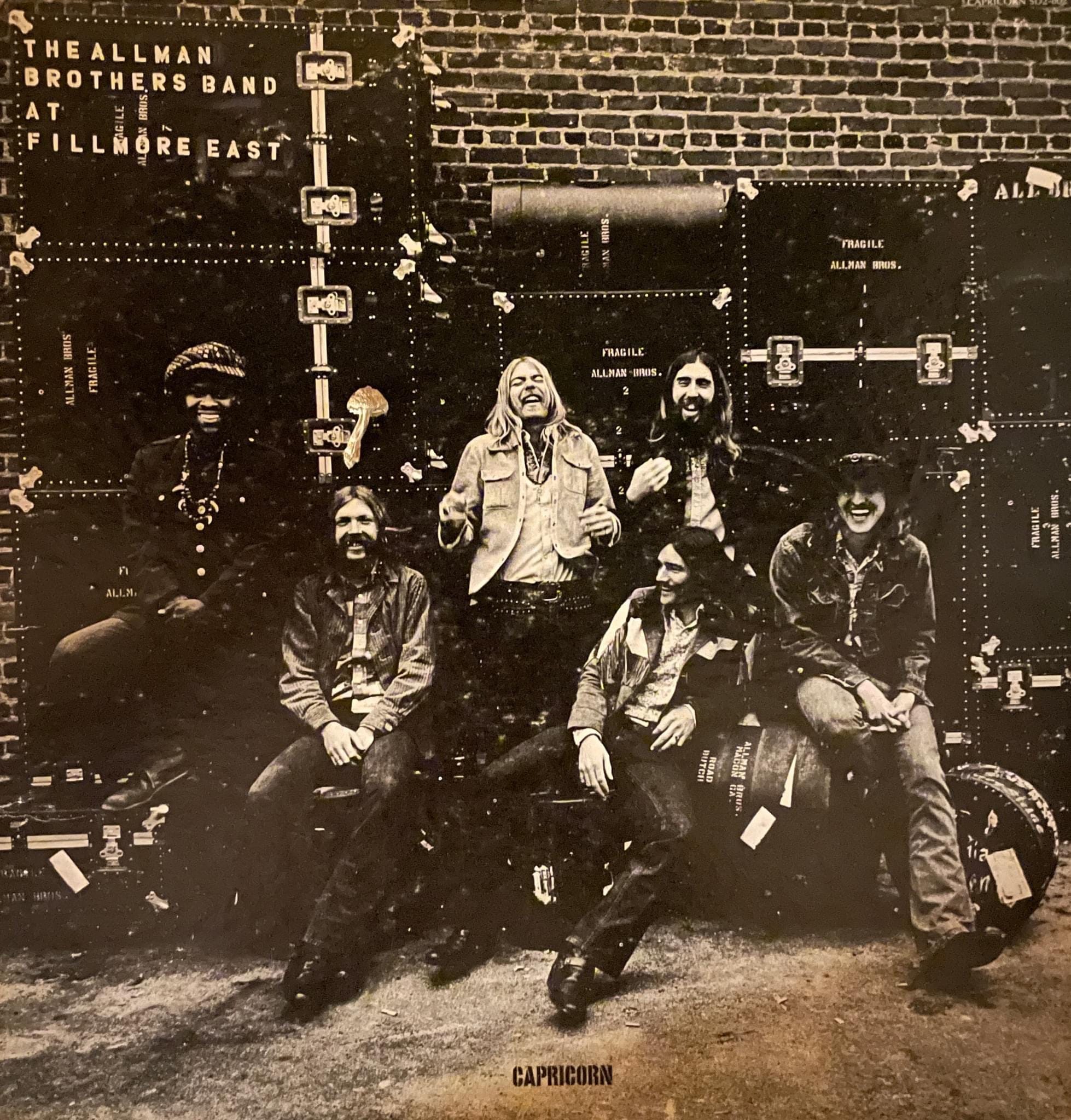
This is a story of my thesis for Play All Night! Duane Allman and the Journey to Fillmore East, that At Fillmore East is the definitive artistic statement of the Allman Brothers Band.
The book started as a Ph.D. dissertation on Duane Allman and the Allman Brothers Band. That was basically a long document that just proved I could complete this long Ph.D. process.
My goal was always to turn it into a book. I asked a friend to read the dissertation. He called me and said, “You just wrote a book on At Fillmore East.”
That blew my mind.
At that point, I was stuck.
I’d written a 500+ page dissertation weaving in every quote, every story I possibly could stating that Duane Allman had changed American music. What I hadn’t done to that point was explain how we know that to be true.
My dissertation said At Fillmore East was the definitive artistic statement of Duane and the Allman Brothers Band. It didn’t answer why that was. Nor, how we know that.
Though it became my thesis in Play All Night, I spent months grappling with what seemed an impossible task.
How could I distill a sound that I find the BIGGEST in the universe, into one album, one place, one moment in time?
Doing so, I had to completely rethink albums altogether. I’m not being nostalgic when I say that album releases since the streaming era are just not what they were in the LP/CD eras. Albums were somewhat rare, precious gifts from artists. We didn’t have video and audio of nearly every concert or television appearance.
In Duane’s era, there were generally two ways to make a living playing music: playing live and AM radio hits, where the Allman Brothers found no room. Where they succeeded was on freeform FM radio, which was album-oriented.
To that point, albums had been a collection of singles. The Beatles helped make them artistic statements. It became de rigueur to think of records holistically, as a statement.
At Fillmore East was their third album. They’d released their self-titled debut—sporting a BANGER of a Southern gothic image1—in 1969 and Idlewild South a year later. The debut flopped. Idlewild hit #38 but wasn’t a breakthrough hit.
Reviews were positive about both albums. But by the time you get to the Idlewild reviews, many writers have seen the Allman Brothers live. “Yeah, this is good and everything, but if you’ve seen them live, this doesn’t even touch it. They’re so much better.”
And from 1969-1971 the Allman Brothers Band are ABBsolute road dogs. Touring 300 days a year, playing an estimated 250 shows a year.
And these were not just paying gigs, they’d often play anywhere they could find an outlet. Sometimes they’d show up at a park on an afternoon and jam. They were building their chops and an audience.
The band found it difficult to capture that live sound in a studio because they thrived on the energy of playing in front of an audience. That synergy with the audience pushed the band. They loved the dynamic.
So there was a lot at stake when they decided to record their third album live on the most important stage in rock: Bill Graham’s Fillmore East.2
It was a bold decision.
Why? This is something I explore in Play All Night! Duane Allman & the Journey to Fillmore East extensively.
At Fillmore East answers the questions:
What was Duane/the ABB trying to do with music?
How do we know that? And how do we know if they were successful?
We know what they were trying to do because they said it. And it’s not just Duane—he sets the vision, but they all share a vision: improvisational music at the highest level performed in front of live audiences.
At Fillmore East is how we know if they succeeded. Number one, it is the album they recorded when it was all on the line. “This is how we want to be remembered.”
Because after two years of relentless touring, the Allman Brothers and their manager Phil Walden were hundreds of thousands of dollars in debt. There was talk of breaking up the band. And we’d remember them differently had the band broken up in 1971. They would be much more of an underground band, a secret maybe, instead of a the Rock & Roll Hall of Fame band they became.
The second way we know it was successful is because it sold well. It was a massive hit that saved the band, Walden, and Capricorn Records.
This is a band that literally had all forms of American music in their fingers. They had blues. They had jazz. They had folk. They had country. They had string music, bluegrass-y stuff. They loved the power and dynamics of classical music.
They looked to what San Francisco bands like the Jefferson Airplane and the Grateful Dead were doing with their music. Expanding the American musical canon with psychedelic musical explorations.
Like the Airplane and the Dead, the Allman Brothers Band created their own particular musical stew, a dish uniquely theirs. In my dissertation I called it “American music,” but that has always seemed inadequate.
And At Fillmore East isn’t really Southern rock. It’s much bigger than that and has a sound completely its own. Released in 1971, Fillmore predates the 1973 explosion of Southern rock with Lynyrd Skynyrd and the Marshall Tucker Band joining the Allman Brothers Band on the charts.
The Allman Brothers in Duane’s era is altogether different. Reviewers lauded At Fillmore East in language that reflected the band’s own vision as they struggled to categorize the sound. This is true in countless reviews, from students in college newspapers to the great Lester Bangs of Rolling Stone.
“I just don’t know how to tell you what I’m hearing, but it’s really awesome.”
Their sound and attitude was southern and uniquely theirs. The Allman Brothers Band were doing something completely new. And new takes a little while sometimes to catch up.
Phil Walden, manager/record company owner/booking agent (no conflicts of interest there), remembered frustration. “We were just afraid maybe this group was too musical. Like, they were just too good for the audience.”




Unique swag from LLtABB
Jimmy Carter. I’ve always loved this Walt McNamee shot of then-candidate Jimmy Carter in an Allman Brothers shirt. Carter is speaking to reporters July 4 weekend 1976, shortly after the band’s break-up and Gregg’s testimony in a federal drug case. I tagged the barn in the back with Long Live the ABB shroom 2 from Psychodelik Pete.

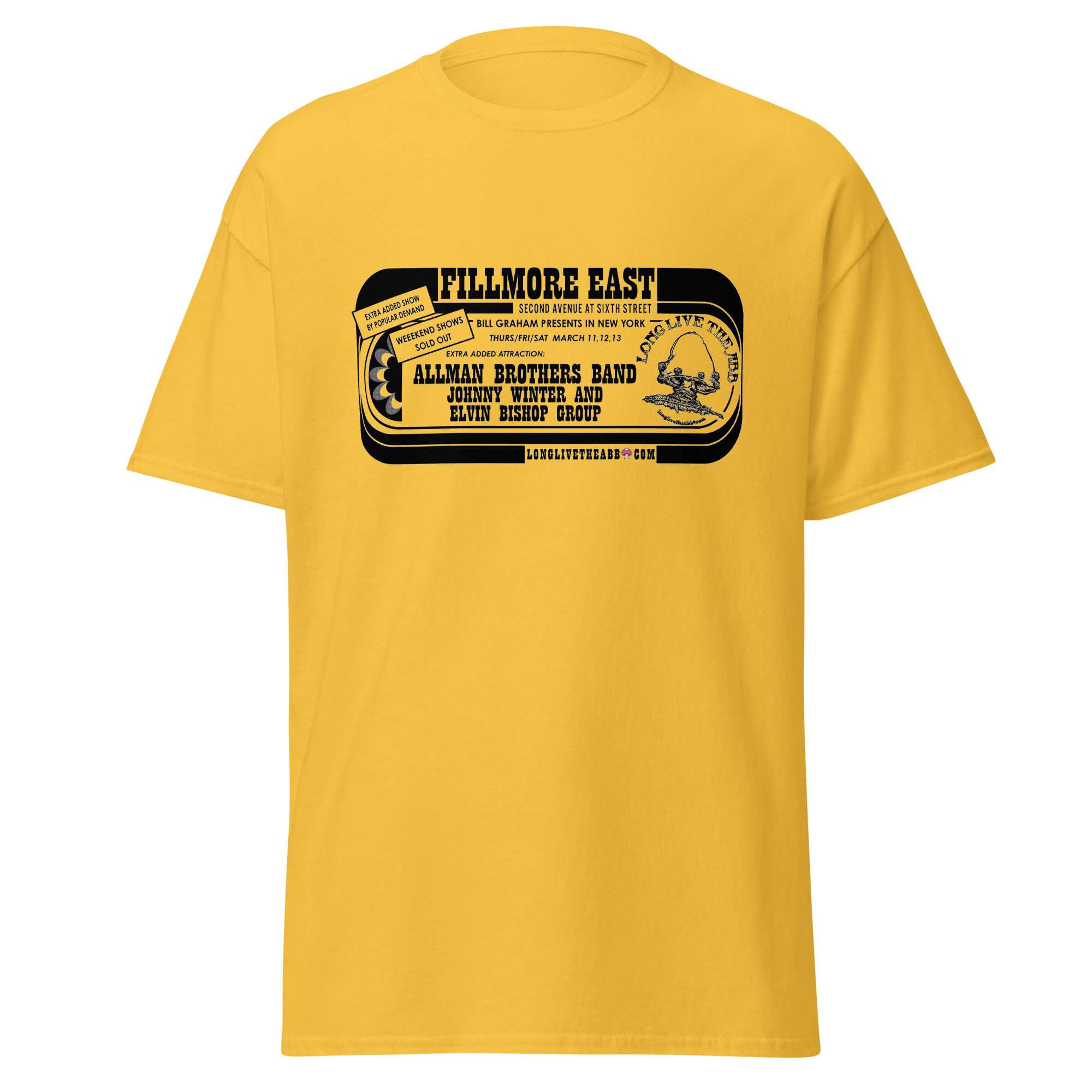
Fillmore East ad. This is an adaptation of an original newspaper advertisement for the original Fillmore East recording sessions. I replaced Johnny Winter’s face with the LLtABB shroom and moved the Allman Brothers to the TOP of the bill, a spot they EARNED after Johnny Winter demanded they switch places because he didn’t want to follow them