


I am very proud to present “You got something you wanna say? Walk out on that stage and do it”: Fillmore East, Bill Graham, & the Allman Brothers Band, a video essay in collaboration with my daughter, Ryan.
This preview for paid subscribers of Long Live the ABB comes on the 55th anniversary of the At Fillmore East sessions: March 11, 2026.
You can upgrade now to preview or wait until release on March 13, the 55th anniversary of the final shows of the run.
A student at New York University asked to interview me about Bill Graham and Fillmore East, (particularly) and West for a documentary project. As I explained to Caroline, I’m not a historian of Bill Graham, but Play All Night! Duane Allman and the Journey to Fillmore East documents well his connection to the Allman Brothers Band story and how important he was in breaking their career and as the premier promoter in rock.
What follows is the conversation that emerged from our discussion.

Bill Graham
I’m not a Bill Graham scholar, only as much as it attaches to the Allman Brothers Band, but his story fascinates me. Born in Berlin and orphaned in the Holocaust1, Graham grew up in the Bronx. He graduated from City College of New York with a business degree or, as he called it, “efficiency expert.”
Drafted in 1951, he earned a Bronze Star and a Purple Heart in the Korean War. He began his career in the service industry in New York City restaurants. After military service, he worked in the resorts of the Catskills, where he honed skills that later defined him—logistics, people management, and showmanship.
Graham had a genuine love for theatre and trained to be an actor.2 His acting career never took off, but his connections to that world led directly to his groundbreaking career in rock promotion.
Fast-forward to 1965. Graham, now in San Francisco, has just taken over as manager of the political satirists the Mime Troupe, after their leader’s arrest on obscenity charges.
He rents the Fillmore Auditorium for a benefit concert for legal defense. The November 6, 1965 show was transformative for Graham.
He initially approached the event with a practical, almost reluctant mindset. His primary goal was to support the Mime Troupe.
What unfolded fundamentally reshaped his trajectory and that of rock music. The concert featured a diverse mix of local bands, including Jefferson Airplane and the Fugs. Poets and other performers brought more countercultural spirit.
Graham saw the Fillmore Auditorium as a space that could host electrifying, immersive performances. The raw energy, the packed audience, and the seamless interplay of music, performance, and activism left an impression. Graham saw music draw massive, passionate crowds while serving as a platform for a broader cultural movement.
The benefit sparked his understanding of the importance of live music, the live music experience, to the youth counterculture. It catalyzed his shift to becoming a central figure in the burgeoning Bay Area music scene, leading to his stewardship of the Fillmore and his role as one of the most iconic concert promoters of the era.
He eventually secured a permanent lease for the Fillmore Auditorium, 1805 Geary Street, San Francisco, which he operated until summer 1968, when he opened Fillmore West at 10 South Van Ness Ave.
Fillmore East, East Village, NYC
He’s so successful in San Francisco that he decides to open a venue in New York City. He buys the somewhat derelict Village Theatre in the heart of the East Village, 105 Second Avenue. He opens it as a rock palace: Bill Graham’s Fillmore East.
Graham was a professional who had come up in the Borscht Belt. He understood guest service, and he gave his best to provide excellent value for the entertainment dollar. Built in 1926 as a Yiddish theatre, it was one of those glorious movie/vaudeville palaces built in the years between World Wars I and II.
The building was in pretty poor condition when Graham took over in 1968. The Fillmore East had an odd configuration. Its narrow lobby fronted on Second Avenue. The theatre itself sat back beginning about a half-block east along 6th Street. It sat around 2,700. It had an orchestra section and one long balcony.
The shows themselves were always an event.
Graham said, “I wanted Fillmore East to be the white man’s Apollo Theatre. ‘You got the stuff? You got something you want to say? Walk out on that stage and do it!’ When you walked out on the stage at Fillmore East, you knew. Sound, lights, special effects, light show. ‘You want to show the world your stuff? Do it here.’” “The Fillmore East,” he said, “became what I had hoped it would be.”3
The building shared a block with New York University’s Tisch School of the Arts and NYU students were essential to Graham’s operation, adapting and improving upon things he’d learned in San Francisco about lighting, sound, and stage management. Above all, live music was an experience for musicians and audience alike. Graham cared about his audience. He invested in sound, invested in the light show.
Bill Graham presents
I always think about the The Last Waltz, which he promoted at Winterland in San Francisco. A lavish event he threw on Thanksgiving Day 1976 to say goodbye to the Band, one of the greatest of their era. Graham served a full Thanksgiving dinner. He brought in ballroom dancers to entertain the crowd. The stage was beautifully set, complete with chandeliers from the San Francisco Opera House. The Last Waltz may have been Martin Scorsese’s film, but it’s a film about a Bill Graham production.
Graham made money from rock promotion, but he provided quality—a lot of bang for the entertainment buck. He was foremost a businessman. He recognized artistry had value and he made money presenting it. He went into rock promotion thinking about money differently than the more idealistic young people of the San Francisco counterculture. He saw no problem making a good living providing settings for these important cultural events.
Graham added to the mix unique artist pairings, eclectic bills that educated listeners and exposed his audiences to the highest level of entertainment he could afford. Graham staggered his bills so while the headliner got all the attention, he gave the audience something different at each step.
“Freddie King didn’t mean anything in San Francisco at the time. But Quicksilver alone would sell out the hall. The ice cream was the Grateful Dead or Quicksilver or Jefferson Airplane. But the vegetables you had to go through to get to the ice cream might’ve been Lightnin’ Hopkins or Junior Wells.”
At the Allman Brothers Band’s second Fillmore West appearance, January 1971, they were the middle band on a bill with Electric Hot Tuna. The opener was the Trinidad Tripoli Steel Band, a 24-member steel drum ensemble from the Caribbean island. Other seemingly disparate pairings over the years include Rahsaan Roland Kirk with Jethro Tull, Woody Herman with the Who, and Miles Davis with Neil Young and Crazy Horse.
Graham was an unlikely tastemaker. When he got started, he was ignorant of contemporary music. He preferred jazz, big band, and mambo. “From the very beginning,” he said, “I accepted the fact that I had no real personal knowledge of the rock scene of that era.”
He didn’t listen to radio. He watched what crowds responded to and served them more of the same.
“I don’t think Bill noticed our music much,” said Grateful Dead guitarist Jerry Garcia. “He always loves it when the crowd gets off even if he doesn’t personally understand or personally dig the music.”
Graham’s rosters were a genuine blending of cultures that art and music provide
The touring business remained pretty segregated and the musicians exposed him to Black performers like the Staple Singers, Bobby “Blue” Bland, James Brown, Chuck Berry, and “the ultimate” Otis Redding.
A star on the Black rhythm & blues circuit, Redding had yet to break through to the white market. Said Redding’s manager Phil Walden “Otis had worked to white audiences but at white colleges in the South because it was a tradition. Black people always entertained white people down there.”
The shows were a smash. Said Graham, “Otis Redding was by far the single most extraordinary talent I had ever seen. There was no comparison.”
Graham’s rosters were a genuine blending of cultures, the kind only art, and specifically music, provides.
Nearly every band started out playing blues and they were meeting their heroes.
When B.B. King first played the Fillmore Auditorium, when Otis Redding first played it, they were shocked at how well the white audiences received them. Same was true when Aretha Franklin headlined Fillmore West March 1971.4
Graham exposed the musicians to different sounds. Introduced them to their heroes. And sometimes he altered their performances.
Here’s one example from his autobiography.
“I liked Ten Years After very much as a band but one aspect of their show personified a lot of my difficulty with rock and roll. The drum solo. The endless, seemingly nonmusical drum solo.
Not that theirs was worse than any other. It was not even really bad drumming. It was just like eating dry Cheerios without milk and fruit.
I wanted to set an example for all the bands as to what real drumming was all about. I was introduced to Buddy Rich. I told him I ran a place called the Fillmore in San Francisco and that on this certain show, I had a headliner from England, a group that was very good but they always did a drum solo I didn’t care for.
I told Buddy I wanted to introduce his music to these kids. But that I also wanted them all to see what a drummer really did. What a real drummer was all about.
The night of the show, we set up for Buddy Rich. Little old-fashioned bandstands to hold up the songbooks. Which the kids had never seen before. We set up this little midget drum kit for Buddy. One bass, one little snare, bang bang, that was it. Buddy sat down at the drums.
As I was making the introduction, people were screaming, “ALVIN! TEN YEARS AFTER! ROCK AND ROLL!” The brass section stood up and played that opening riff from “Norwegian Wood.” Then Buddy took off.
BAM BAM BAM BAM BOOM BOOM BOOM WHANGA WHANGA WHANGA BOOM!
The entire room swerved. All the kids going to get something to eat turned around and looked at the stage. Buddy fucking wailed! The room was mesmerized. They were eating something they had never eaten before and they could not believe how good it was.
They were just glued to the stage. He held that room for an hour. And he was great.
Now I had prepared myself for what came next. I had rehearsed it eight thousand times. We were now in the break, setting up for Ten Years After. I walked into their dressing room.
Ric Lee, their drummer, was at his drum pad warming up. He said, ‘Hey, Bill. How you doin’?’ I said, ‘Ric, how are you? Hey, man. Can’t wait for your solo tonight, baby!’
He didn’t do one. They walked out and played a set of harsh rock and roll and if he took three seconds to go off by himself, that was it. It was great.”
Here’s Bill Graham constructing a lineup using a jazz legend to teach a rock drummer a lesson. And in the meantime, showing his audience the root source of the music they loved so much.
And again, it’s about the music. Bill Graham understood that. He cared about quality for the musicians and the audience. And he delivered that such that bands flocked to Graham’s Fillmores to record live albums. Not just the Allman Brothers Band, but dozens of records, many of them stone-cold classics. Here’s but a sampling of some of the standouts in my listening retinue.
Aretha Live at Fillmore West
King Curtis Live at Fillmore West (recorded at the same residency as Aretha)
Grateful Dead: Live/Dead (Fillmore West)
Albert King Tuesday Night in San Francisco and Wednesday Night in San Francisco Fillmore Auditorium)
Jimi Hendrix Band of Gypsys (Fillmore East)
Joe Cocker Mad Dogs & Englishmen (Fillmore East)
Jefferson Airplane Bless Its Pointy Little Head (Fillmore East and West)
Miles Davis At Fillmore
The Live Adventures of Mike Bloomfield and Al Kooper (Fillmore West)
Crosby Stills Nash & Young’s 4 Way Street (Fillmore East)
This is not a comprehensive list, just my listening habits. And these are just full albums. It doesn’t count partial albums5 or tracks released on other albums.6
If that list isn’t proof enough, give a good listen to At Fillmore East. The music sounds ABBsolutely ALIVE.
Much of that comes from Graham’s sound system. Producer Tom Dowd captured that sound brilliantly for that record and I’m 100% convinced the stellar sound has a lot to do with the album’s enduring success.
“Fillmore” connotes quality.
It was the gold standard.
The biggest stage in rock.
New York City.
Artists understood that Bill Graham represented quality. Graham demanded artists meet his high standards. He trusted his gut and he had good taste.
The Allman Brothers Band met the mark.
“I played them because I thought they were really good and I thought the public would think so as well. The Allman Brothers made me feel good, in that particularly physical way. You may not move, but it affects your body as well as your emotions. The Allman Brothers have that ability to make me feel really good, to put out the good spirit within you.”
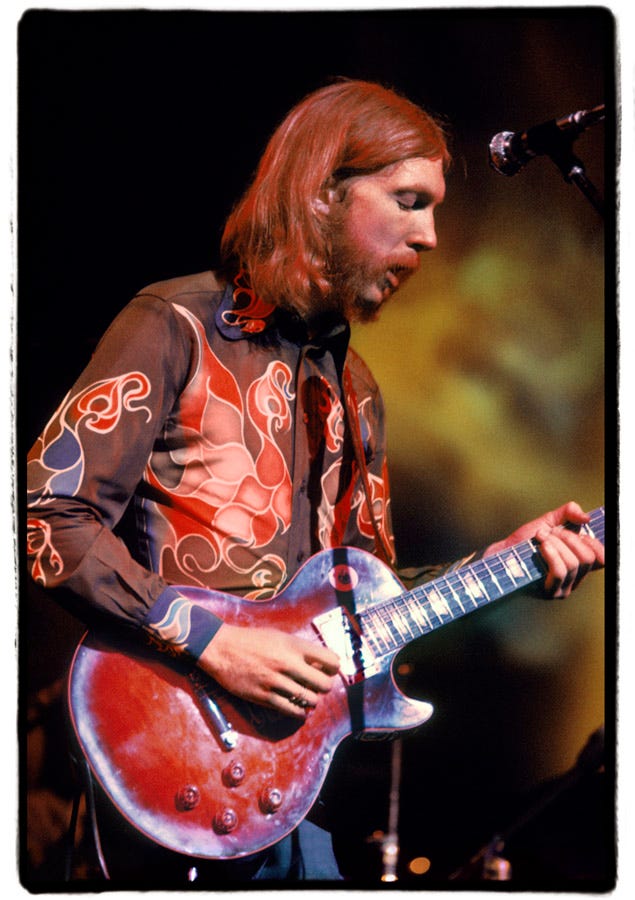
Fillmore East was the pinnacle. It was where Duane and his bandmates recorded their make-or-break third album. And what they recorded of such high quality that even the word “Fillmore” connotes quality live music. The Allman Brothers themselves have a lot to do with that, of course.
At Fillmore East is a record that has just endured. And as a historian of place, I can’t overlook the significance of the name, Fillmore East. It grounds the recording in situ, New York City’s East Village.
The Light Show
Bill Graham understood that the audience—the consumer, to put it in 21st-century terms—was vital to the experience. And the light show added to the magic.
Two different light shows served Fillmore East: Joshua Light Show & Joe’s Lights. Graham hired Joshua White in 1968 to run Fillmore East’s in-house light show. When White and Graham parted ways, Joe Raposo/Joe’s Lights replaced them. Like most places in New York City, space was tight at Fillmore East.
The light show projected from behind the stage. And when you see Amalie Rothschild’s photos you can see the ingenuity at work. For example, Graham’s people invented a lazy Susan-like stage set-up—that would rotate the drums around. That infrastructure also pushed the musicians almost to the edge of the stage.
Joe Cocker during the Mad Dogs & Englishmen tour is almost standing in the audience. Now they have 30 people on stage—not a lot of room, but the Fillmore East was a very intimate space, as was true for most of the ballrooms and theatres that nurtured the rock scene of the late 1960s and 1970s.
The light show was a vital part of the performance, and that was especially true for the Allman Brothers Band when they recorded At Fillmore East March 11-13, 1971. They weren’t headliners that weekend. They were an “Extra Added Attraction”—the middle band after the Elvin Bishop Group and before Johnny Winter.7
Alan Arkush:
“I was a member of the light show by then and we weren’t booked to work that weekend because Johnny Winter was the headliner and Johnny Winter didn’t like a light show. We didn’t perform, we just came to see the shows. Duane saw me and he went, ‘Where’s the light show?’ I said, ‘We’re not hired to work this weekend.’ ‘What do you mean? I brought the whole family up here to see the thing.’
They were one of the few bands he would ask that the stage lights to be lowered so people could really see the light show. Duane called Bill in San Francisco and Bill said, “Yeah, hire the light show. Will bring them on for you. If you guys want the light show, will do it. If it will make you feel more comfortable.”8
The light show had the effect Duane wanted. The bulk of At Fillmore East was recorded Saturday, March 13.9

Closing Fillmore East
One reason Fillmore East is remembered as such an epic venue is because it had a really short lifespan.
It opens in spring 1968, and by summer 71, Graham shuts it down due to what he saw as greed on behalf of artists’ managers and agents.
Graham’s goodbye letter, featured in the Village Voice is pretty epic:
“Ever since the creation of the Fillmores, it was my sole intention to do nothing more, or less, than present the finest contemporary artists in this country, on the best stages and in the most pleasant halls. The scene has changed and, in the long run, we are all to one degree or another at fault. All that I know is that what exists now is not what we started with, and what I see around me now does not seem to be a logical, creative extension of that beginning. Therefore, I am taking this opportunity to announce the closing of the Fillmores, and my eventual withdrawal from producing concerts.10
The Fillmore will become a thing of the past. I will remember with deep emotion and fondness the great and joyous moments of that past. I sincerely thank the artists and business associates who contributed to our success. But I warn the public to watch carefully for what the future will bring.
The rock scene in this country was created by a need felt by the people, expressed by the musicians, and, I hope, aided to some degree by the efforts of the Fillmores.
But whatever has become of that scene, wherever it turned into the music industry of festivals, 20,000-seat halls, miserable production quality, and second-rate promoters—however it went wrong—please, each of you, stop and think whether or not you allowed it, whether or not you supported it regardless of how little you received in return.”11
He chose the Allman Brothers Band to close the hall the weekend of June 25-27, 1971. The band themselves calls the late show June 26, the last public show at Fillmore East, as the greatest Allman Brothers Band show of all time. (It wasn’t recorded.) The final night, Allman Brothers Band played the final set at Fillmore East.

Fillmore East was a product of its time
Graham’s was an era of experimentation, but that’s true for most musical eras.12 Graham had his finger on the pulse of the cultural zeitgeist of his moment.
Graham always understood it was about the show, not him. But he definitely impacted the cross-pollination. He used his bully pulpit to book bands he preferred, who he believed deserved to be heard.
And this was important. Artists just need a chance to get in front of audiences. Graham was intentional about that, certainly with the Allman Brothers Band.
The only time the Allman Brothers Band headlined Fillmore East was when they closed the venue. They hadn’t even released At Fillmore East yet (it released the following week).
Yet Bill Graham chose this relative unknown southern band to close the hall. That’s how much they meant to him.
“I wanted to build them into a headliner, and I thought they should have turned the corner sooner.”
He did. And they had just recorded a landmark album at his venue that everybody knew was going to be a hit.

Graham closed the Fillmore East with a big party. Had a bunch of artists play the final weekend—June 25, 26, 27, 1971.
The Allman Brothers Band closed all three nights.
When the Beach Boys manager demanded to close on the 26th, Butch Trucks remembered, “Bill didn’t even look at him. He just said, ‘Well, you can go ahead and pack up your shit and get out of here. I’ve got my closing act.’”13
The band acknowledged that show as the greatest they ever played. Prior to the 11:30 show, the theatre had been cleared for a bomb threat.
This was a really symbiotic relationship. They closed the venue with an epic 3+ hour show. Here’s how Graham described their set 24-hours later.
“They got out on the stage about 2:30, 3:00 in the morning, and they didn’t get off till about 7:00 in the morning. And it’s not just that they played quantity, and for my amateur ears, in all my life, I’ve never heard the kind of music that this group plays: the finest contemporary music. We’re going to round it off with the best of them all, the Allman Brothers.”
No recordings exist.
The next night, the night of Graham’s introduction, was recorded and simulcast on radio. It was an invite-only music industry affair.
The crowd was tame, to say the least. “Y’all are awful quiet,” Duane said, adding “too high” off mic.
And then the Allman Brothers walked off the stage. That was it. Graham closed the venue for good.
That was June 27, 1971.
The theatre at 105 Second Avenue saw several attempts to recapture its former glory.
The building operated as Villageast in 1972, before being rebranded as the NFE Theatre (New Fillmore East) in 1974. Following Graham’s objections, the use of the Fillmore name, it was christened Village East in 1975.
The building’s most notable post-Graham chapter began in 1980 with its transformation into The Saint, a revolutionary gay nightclub known for a dazzling planetarium dome and cutting-edge lighting, The Saint closed in 1988.
The theater portion met its final curtain in 1995, with complete demolition of the auditorium following in 1997, it is now an apartment complex.
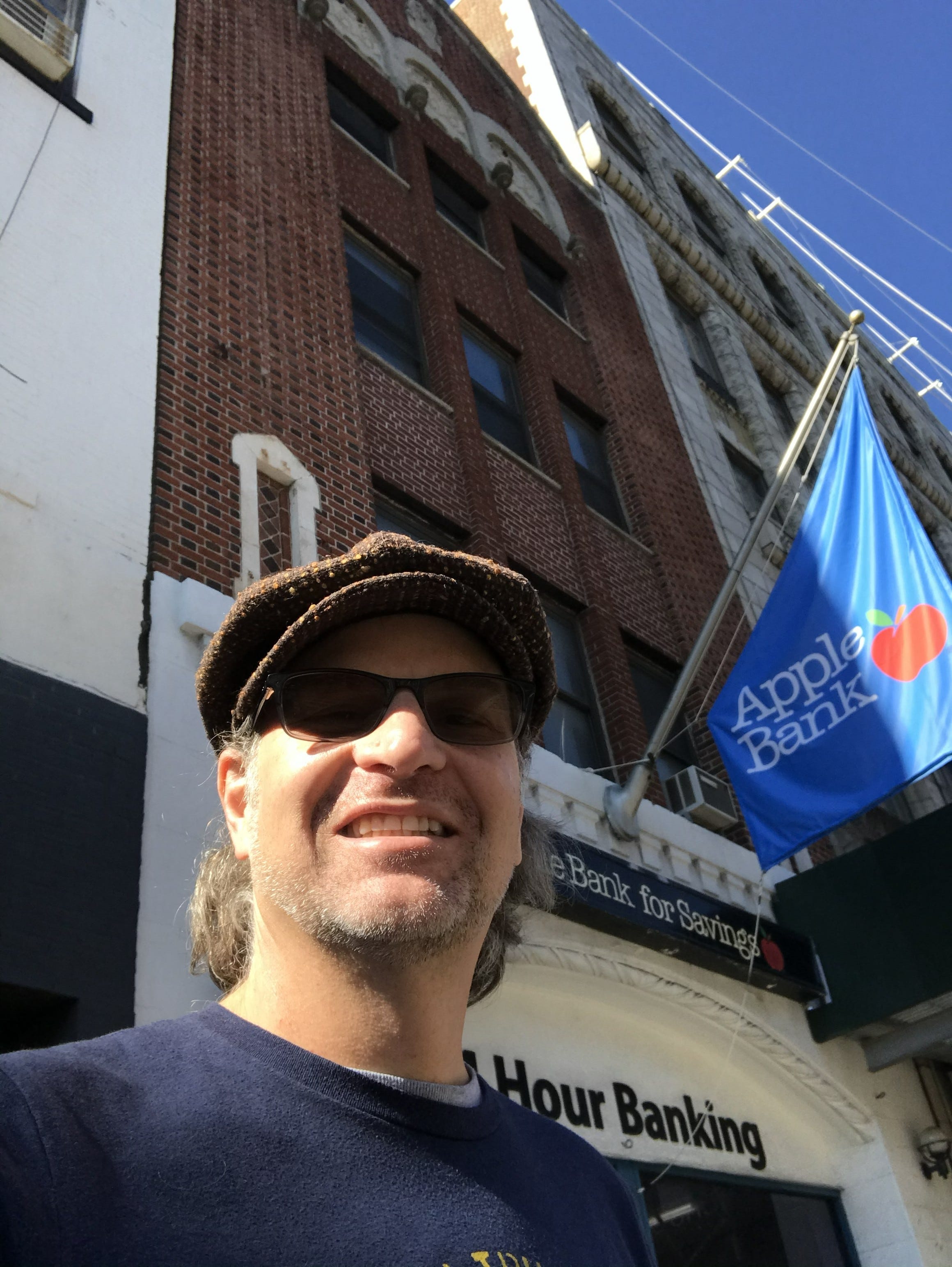
The original facade and lobby at 105 2nd Avenue remain. As late as 2023, it housed a (now-closed) bank branch with a small Fillmore East display in the lobby.

Part of what was later designated One Thousand Children—unaccompanied child refugees of the Holocaust. (See Immigration of refugee children to the United States.)
Graham actually studied at the Neighborhood Playhouse in NYC, which counts Robert Duvall, Diane Keaton, and Gregory Peck as alumni.
Bill Graham, Bill Graham Presents, 337.
Released as Aretha Live at Fillmore West, and recorded a week before the Allman Brothers Band recorded At Fillmore East in New York City.
The Chambers Brothers’ Love, Peace and Happiness (Fillmore East)
“Toad” from Cream’s Wheels of Fire was from Fillmore Auditorium. They captured “Crossroads” at Winterland (Graham promoted the show but it wasn’t his venue.)
I’ve written a lot about this already, but Winter demanded to switch places after the Friday night early show, such was the power of the Allman Brothers’ performance.
Bill Graham Presents. 307-8.
All but “Done Somebody Wrong” and the last 12 minutes of “You Don’t Love Me.”
Graham continued promoting shows and producing tours until his death in 1991.
Bill Graham, “A Letter from Bill Graham,” Village Voice, May 6, 1971.
The disco era, for example, was also an era of musical and cultural experimentation. I say that without using “disco” as a pejorative. I’m saying that I think the blues-based rock of the Allman Brothers is the most authentic music in the history of the world and some people find dance music to be their most authentic representation. Neither of us is wrong.
Alan Paul, One Way Out.
Image and video credits in the order they appear. Anything not listed specifically is from Getty Images. All archival material is included under fair use (17 U.S.C. § 107) for commentary, criticism, scholarship, and historical analysis. Thomas Monaster (Graham underneath Fillmore East marquee); John Olson (Graham Fillmore East stage); Peter Breinig (Graham outside Carousel Ballroom); William Young; John Brenneis; United States Holocaust Memorial Museum (Stephan H. Lewy and Alex and David Graham); Bill Graham A&E Biography (2002); Bill Bard Associates via the Borscht Belt Historical Marker Project; Steingart Associates via the Borscht Belt Historical Marker Project; Last Days at the Fillmore (1971); Welcome to Fillmore East (1970); Joe Rosenthal; Fred W. McDarrah (Graham shooting a bird); Pictorial Press/Alamy (Fillmore Auditorium); Fillmore East Reconstructed (Keith Mueller) Facebook page; Amalie R. Rothschild (Fillmore East crowd from across 2nd Avenue, Fillmore East marquee from street level); CinemaTreasures.org (Loew’s Commodore, 1968); NYC LGBTQ Historic Sites Project (1939 NYC tax roll photo, NYC Municipal Archives); Mad Dogs & Englishmen (1970); Fillmore East Reconstructed (seating chart image and “reconstructed” video); Cecily Hoyt “The Joshua Light Show Liquid Loops” (1969); Allman Brothers Band “Whippin’ Post” 9/23/70 Fillmore East; Elliott Landy (the Band); Gary Fong (the Band at the Last Waltz) Larry Hulst (Last Waltz marquee); John Olson (Grateful Dead, Jefferson Airplane with Graham); Baron Wolman (Graham at desk, Jerry Garcia); Amalie R. Rothschild (Graham at desk); Monterey Pop (1968); Buddy Rich Drummerworld 1970; Thomas Monaster (Graham); Amalie R. Rothschild (Fillmore East marquee closing weekend); Amalie R. Rothschild (Allman Brothers with lightshow backdrop, and backstage at Fillmore East); Richard Edelman (ABB, Fillmore East 3/11/71); Thomas Monaster (Graham outside Fillmore East); Amalie R. Rothschild (Fillmore East light show crew, Grateful Dead with Duane Allman, Allman Brothers onstage, the Who, Fillmore East interior press conference, Joe Cocker/Mad Dogs and Englishmen, Fillmore East audience, Duane Allman with slide, Fillmore East marquee); Carter Tomassi (Gregg Allman); John Brenneis (Bill Graham on phone); Duaneallman.info (Fillmore East closing weekend tickets); Sidney Smith (Butch Trucks); Fred W. McDarrah (Graham’s bird); Jim Marshall (Berry Oakley and Gregg Allman); “Bill Graham Introduction” from the Allman Brothers Band - The 1971 Fillmore East Sessions; Amalie R. Rothschild (Duane and Gregg Fillmore East stage); Ira Zadikow (Duane and Dickey Betts, February 1970); Amalie R. Rothschild (Allman Brothers Band at Fillmore East); New York Daily News (Fillmore East marquee); Edmund Vincent Gillon (Village East, 1972); Tim Smith (The Saint, 1988); NYC LGBTQ Historic Sites Project (The Saint interior).


