


Episode Overview
Doug Peaches is an engineer who found the Allman Brothers during COVID, got wrecked by the first minute of “Statesboro Blues,” and spent the next several years chasing every Duane Allman bootleg he could find. He tracked down cassette traders, cleaned up recordings, and put them back into circulation. That work is how I found him.
Since then I’ve watched him move through obsessions—Duane’s slide guitar, guitar in general, and now classical music—with the same intensity each time. He talks about conductors and Beethoven’s sketches the way he talks about the Gatlinburg tapes. He’s person who listens with everything he’s got, definitely my kinda people.
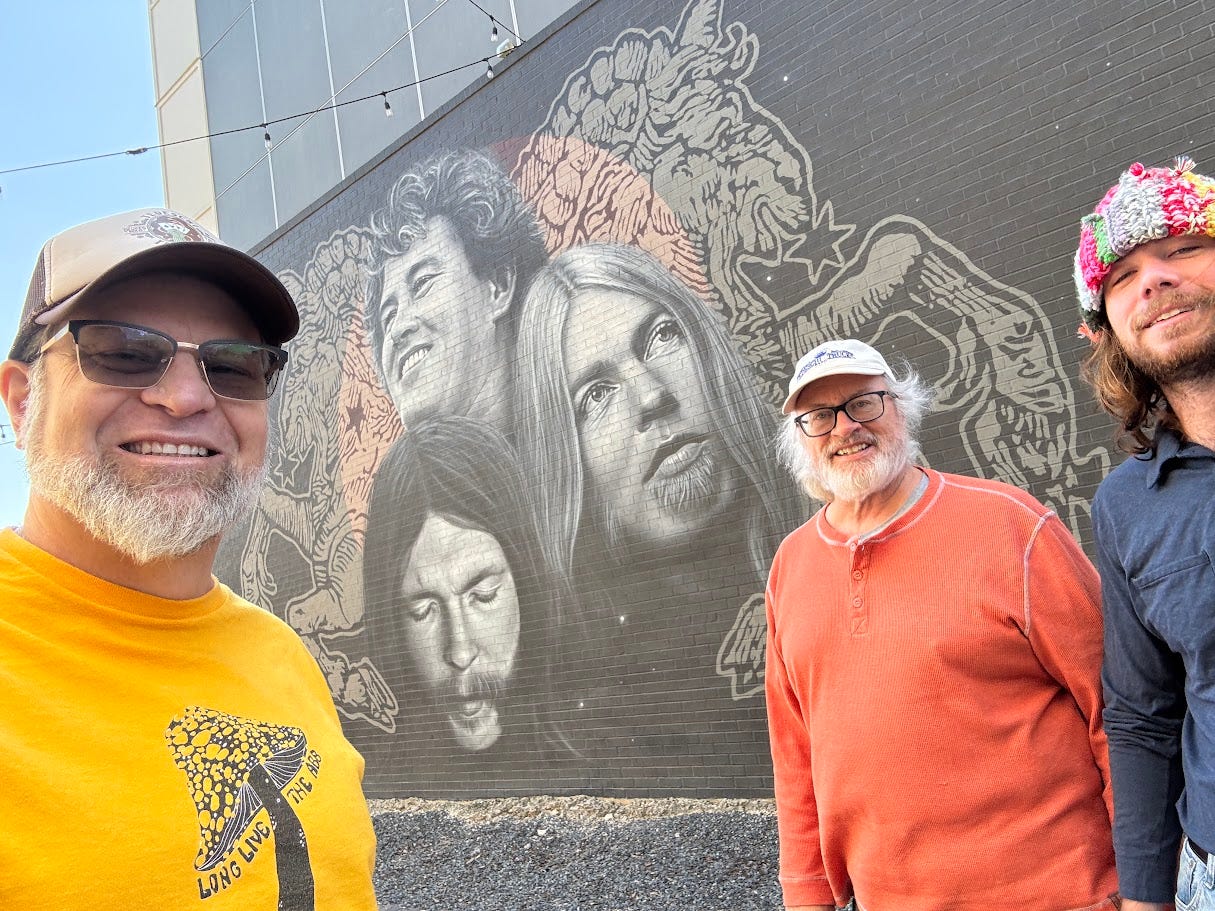
Our Crossroads
Doug and I share the conviction that Duane Allman’s slide sound was meant for us. Not in some abstract way—in the way that makes you stomp your foot and rewind and call somebody and happily scream “Did you hear this?!”
I’ve watched him grow from a bootleg hunter into someone who can sit in a symphony hall and hear the same conducting principles at work that Duane used with the neck of his Les Paul. He credits our concert-going crew for teaching him how to be present at live music. I credit him for reminding me that fresh ears on old recordings can crack open things the rest of us stopped hearing years ago.
The Conversation
We started where Doug started—chess, COVID, and the opening bars of “Statesboro Blues” off the deluxe At Fillmore East. He talked about the moment it clicked, the six months of nothing but Duane playing slide in the car, and the realization that what he loved wasn’t just the guitar. It was Berry Oakley’s thumping bass underneath it. It was the whole.
That led us into the 2014 The Fillmore Concerts box set and a running discussion about how essential Thom “Ace” Doucette’s harp is on “Don’t Keep Me Wonderin’,” Juicy Carter’s out-of-tune squawking (he’s more charitable than I), and the fact that every version of every song across those four shows is different—yet every track they chose for the original record was the right one.
Doug made the case for the 17-minute “Whipping Post” from the Saturday March 13 early show as the best of the lot. He made the case for the Fillmore “Don’t Keep Me Wonderin’” as the definitive version. He also held up the Gatlinburg Sessions1—the highest-generation cassette of Duane, Dickey Betts, Jaimoe, and Gregg working out material for Eat a Peach at a ski lodge near Gatlinburg. Duane on acoustic Dobro. Gregg singing Tim Buckley’s “Once I Was.”2 Dickey playing an early “Ramblin’ Man.” Easter eggs everywhere.
From there we moved to the symphonic quality of the Allman Brothers—Butch Trucks and the timpani, the Beethoven-esque endings, the dynamics and decrescendos that separate them from bands that play four on the floor. Doug introduced sonata form—exposition, development, recapitulation—and mapped it onto “In Memory of Elizabeth Reed.”
Two themes, a long improvisational development, Gregg’s organ section, drums, the whole band back to the head.
I talked about hearing Duane conduct the band with his playing, not just his body—pushing Dickey’s rhythm guitar, shaping Berry bass lines—and how Derek Trucks does the same thing with Tedeschi Trucks Band with almost no visible movement at all. Doug called it conducting from the instrument. It’s same thing Mozart did at the piano.
We talked about conductors—what they do, why they matter, and why two performances of Beethoven’s 5th can sound like different pieces. Doug has attended forty-plus classical concerts since landing in Boston. He’s paying attention to which conductors bring personality and history to the score versus the ones just beating time. The best ones, he said, make their musicians feel safe enough to bring themselves.
That’s Duane.
That’s Derek.
That brought us to Leonard Bernstein and the Omnibus lectures—scripted but performed as if improvised, with a live orchestra, in front of an audience. Bernstein on Bach. Bernstein projecting Beethoven’s three rejected endings onto the floor while conducting each one. Doug’s point was sharp: this kind of musical education barely exists today.
We closed on our friends Steeln’ Peaches out of Orlando, Florida, and an upcoming symphonic concert in 2027 with the Ocala Symphony Orchestra. Doug wanted to know who wrote the arrangements, whether there’d be a conductor, and whether the band would let the orchestra vamp during the floating intro passages of “Elizabeth Reed.” I thought about the Big Band of Brothers project and John Harvey, a professor who created these arrangements out of pure love for the music.
Carrying it forward in a new form is the whole point.


