Episode Overview
Everyone has that person in their life—someone slightly older than you who introduced you to great music. For me, that was Brad Beatty, my first cousin and the person who has known me longest in this life. Brad and I loved the Beatles, Tom Petty, and Steve Miller Band. Sometime in the 80s, he hipped me to punk rock/alternative music.
Brad is a man of deep faith. He founded Heart for Winter Haven to address poverty, homelessness, and broken community in his hometown. He served in the Navy during the first Gulf War, came home, and built something grounded in the belief that generosity—of service, of words, of money—returns more than it costs. He is a counselor by training and was dispensing wisdom at age ten (I say that without exaggeration).
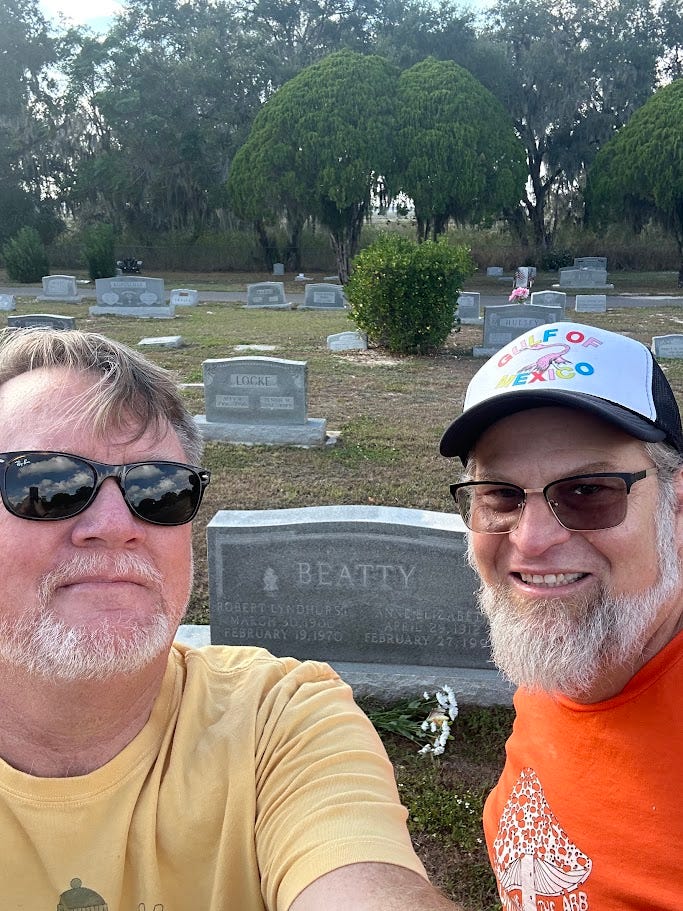
Our Crossroads
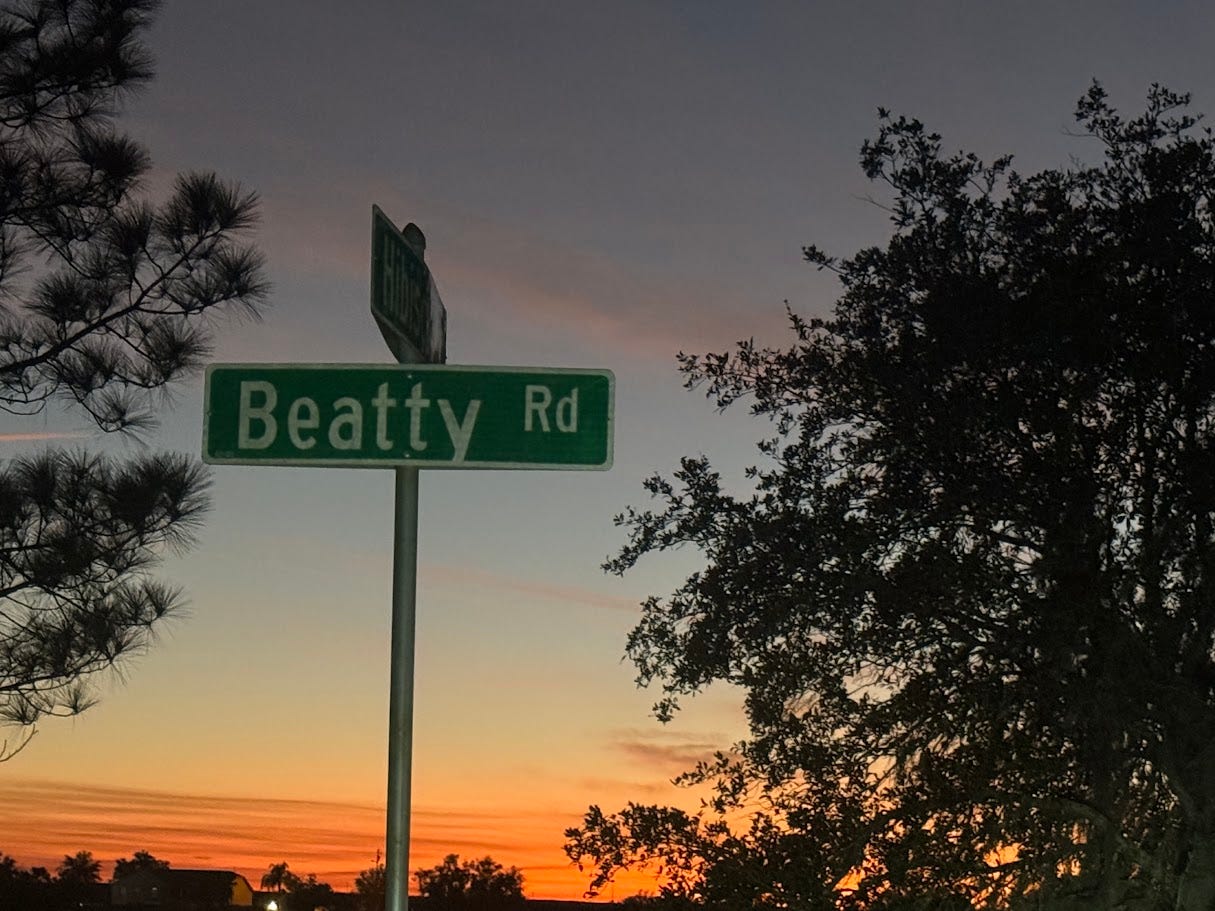
Our dads were brothers who grew up in the 1930s, 40s, and 50s on a chicken farm. The farm was off Beatty Road in Babson Park, Florida, our name on a road sign is all that remains. We share the South—the pride, the inheritance, and the reckoning with a Lost Cause catechism we had to deconstruct on our own terms. Music has remained important to both of us, since discovering the Beatles in my mom’s record collection. As young teens in the early 80s, we listened to (pre-classic rock) radio, excited for the new “Rock Block” weekend format—three Tom Petty, Steve Miller, and Skynyrd songs in a row.1
We share faith, though carry it differently. We are husbands and fathers and Southerners, two dudes unpacking those labels and their meaning in our lives.
In addition to our family connection, our conversation sits at the crossroads of so many topics I regularly discuss: music and art as healing, the South as inheritance, history as liberation, and the enduring question of legacy and meaning.
The Conversation
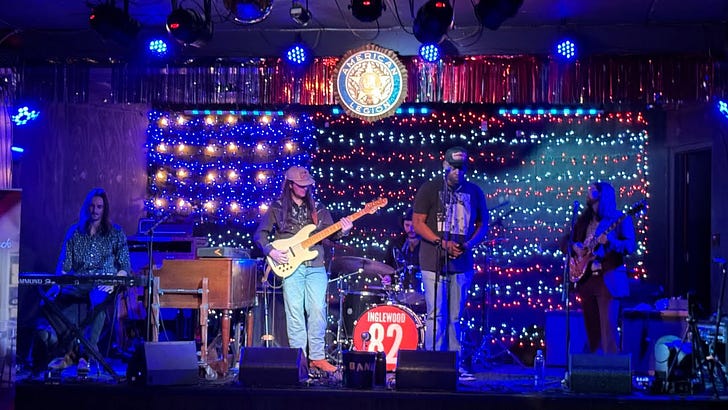
Music. We started with music. Brad is the reason my musical tastes expanded in middle school in the 80s. He brought me to the Smiths, New Order, Black Flag, and Minor Threat—an entire musical universe that shaped both of us. These thoughts rolled through my mind at the Orange Blossom Revue in Lake Wales,2 as we stood together and watched the Drive-By Truckers, a band that means as much to me as any Southern band since the Allman Brothers.3
Abide. Brad used the phrase to describe the Allman Brothers. Not “abide” in The Big Lebowski sense. Abide as in being present. He observed you can feel how present the Allman Brothers are with each. That presence pulls you in. He connected it to the way music calls us out of the anxieties of the future and the regrets of the past and into the moment. It’s a brilliant construct.
Family. We talked about family inheritance, specifically the legacy of the Lost Cause. Though we are six generations removed from our Southern family’s Civil War experience, the mythology of the Lost Cause reached us intact. Brad saw through the inherent racism watching his father interacting with his Black citrus industry workers and teaching him to respect them. My journey was more academic. It began in undergrad and moved into full focus during a New South class my first semester in history in graduate school, when the lengths white Southerners went to keep Black people subjugated hit me as indefensible.
History is liberation. There is greater power in saying “our ancestors made a mess” than the weak sauce of defending what they built. Brad notes that the residual pain belongs to the persecuted and the inheritors. He concludes that we should look to the margins and be more thoughtful about how we build the future. He said it with humility and without qualification.
Place. The farm off Beatty Road in Babson Park—a family poultry farm started by an Irish goods trader and the only daughter of a physician who left New York City because they were tired of it. When my dad died in 2014, Brad and I went to the farm together to get a scoop of dirt to place in the ground with my father’s urn because that place was his, and ours.
Theology. Brad had a spiritual reawakening at twenty-one and went back to the ancient texts with the same seriousness he brought to punk rock—looking for the real thing underneath the packaging. He found the ministry of reconciliation and built a career around it.
Music and Art. My evangelical upbringing taught me any non-spiritual music was of the Devil. And I carried guilt for years about my love of music. Brad cut through that cleanly: art is God-breathed whether the artist intends it or not, because creativity creates something different in every person who encounters it. Art is a lens and a mirror—you look through someone else’s eyes and catch a reflection of yourself. He said if you saw the whole reflection at once, you would fall apart.
Heart for Winter Haven. Brad founded H4WH after returning to his hometown with a love for his city and a conviction that the love he had received from God was not his to keep. The organization addresses poverty and homelessness through the lens of broken relationships—with family, with work, with money, with self, and with God. Brad noted homelessness is a man-made problem: finite & solvable if the will exists. Their goal is to end child homelessness in Winter Haven by the end of 2030—a tall order given 50%+ families in Polk County are one missed paycheck, one broken transmission, one uninsured broken arm from the margin.
Community. Hope gets passed around in community. Hope gives people courage. Brad believes God created us for community and that your community works better when you honor each other.

Resources
Bob Beatty, Play All Night: Duane Allman and the Journey to Fillmore East—https://www.amazon.com/dp/0813069505