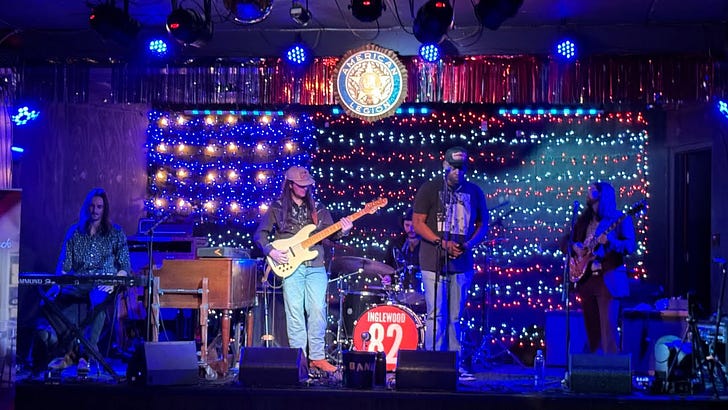
I want to stop and acknowledge his IMMENSE contribution to the Allman Brothers Band.
[Bonus preview episode of Conversation from the Crossroads for paid subscribers.]
Lead Bass
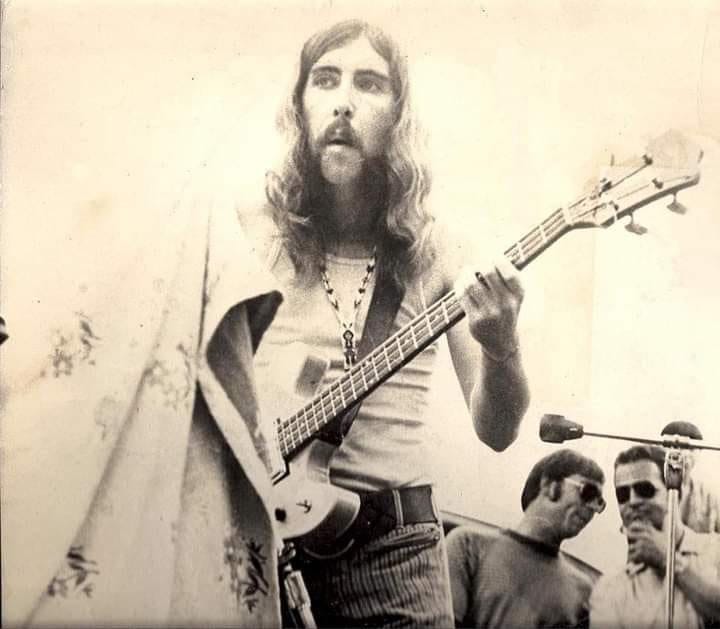
Berry laid the foundation with rock-solid bass, something his successors in the band—Lamar Williams, David Goldflies, Allen Woody, Oteil Burbridge—brought to the group in their own way.
All of them following Berry’s formula of lead bass, as I call it in Play All Night.
Berry grounds the band rhythmically, tying the drums, the guitars, and organ all together. But he also propels it forward in a melodic sense.
What Berry’s doing is pretty incredible.
It was one of the first things I noticed once I finally truly heard the Allman Brothers. When they truly clicked.
The bass is a third lead guitar.
And I honestly didn’t know you could do that with a bass until I heard Berry Oakley.
I am on record saying had Berry not died a year after Duane and in the exact same manner, Oakley would be on the Mount Rushmore of rock bassists. One can only imagine the career he’d have had had he gotten to record jazz or funk or even reggae!
Berry’s not a footnote by any means, but like Dickey (who outlived him by 54 years), he is somewhat of a poorly kept secret. And that’s particularly unfair given what a groundbreaking player Berry was.
Anytime I give love to Berry it elicits shouts of acclamation and great conversation about his uniqueness.
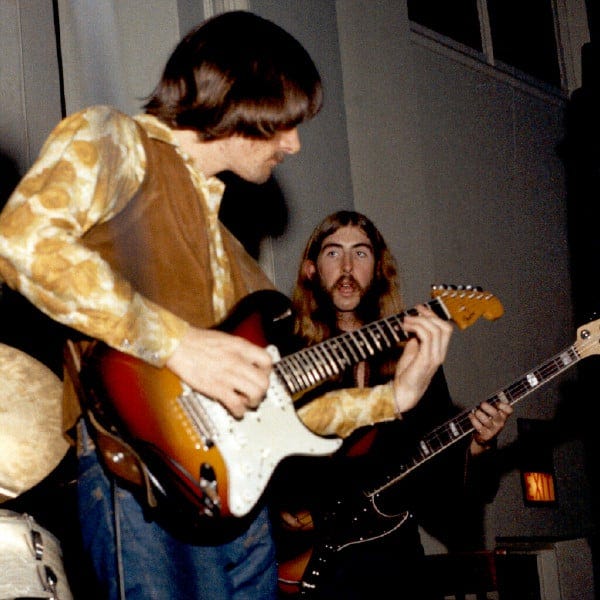
Berry’s chief influences were Phil Lesh of the Grateful Dead and Jack Casady of Jefferson Airplane. Their influence on Oakley made the Dead and the Airplane the Allman Brothers’ psychedelic rock exemplars.
All three groups updated the American music canon through their unique musical sensibilities.
All three groups used a lead bass player to anchor their sound.
Berry’s background
Berry started out as a lead guitarist in his hometown of Chicago. He moved South in 1966—“As soon as I had enough sense,” he said. Up to that point, Oakley had been a guitarist. He took a gig as a bass player with Tommy Roe’s backing band, the Roemans and remained primarily a bassist the rest of his life.
Eventually Oakley migrated to southwest Florida where he ran into Dickey Betts. They formed the second pre-Allman Brothers Band partnership: the Second Coming.1 (Duane and Gregg were the first, natch.)
Duane had been recruiting Berry for his band for several months when Oakley showed up to Muscle Shoals to play with him and Jaimoe.
“It was amazing,” Jaimoe said. “It was like, ‘Holy shit! Where did this motherfucker come from?’ It became a whole different ballgame, and at that point my whole perspective changed from what it was when I went [to Muscle Shoals].”
What did it sound like when Duane, Berry, and Jaimoe played together?
“Closest I can relate is the first time I heard Mahavishnu Orchestra.
In the beginning it was even more spiritual. I can remember several times when I was so at peace with what I was playing that my spirit left my body, right on stage.
This is a fact. Since Duane and B.O. have gone on, I have never experienced this while playing.
I have experienced it hearing one other band play and that was Mahavishnu Orchestra.”
Like hearing Mahavishnu Orchestra for the first time.2
The jams were that groundbreaking to his soul he referenced John McLaughlin’s Mahavishnu Orchestra, one of the most mind-blowing bands to ever grace the stage.
Back to Oakley
Berry didn’t get many bass solos with the Allman Brothers Band. (ABBassists typically get one spot a night.) But honestly, he’s soloing all night.
All night.
Listening to Berry play amazes me. I hear so much push-and-pull, call-and-response. I love the way Berry drives the band in answering what the soloists are doing.
My favorite is “Mountain Jam,” issued on Eat a Peach, recorded during the At Fillmore East sessions in March 1971.
The 33-minute jam evolves out of a 23-minute “Whipping Post”—two songs stretching nearly an hour that would close the band’s momentous four-night run recording their breakthrough third album.
Butch’s timpani thunders out of “Whipping Post,” setting the pace with Jaimoe’s drums. Berry’s bass weaves in, out, around, under, and through as Duane, Dickey, and Gregg toy with the melody before they announce the theme: Donovan’s “There is a Mountain.”
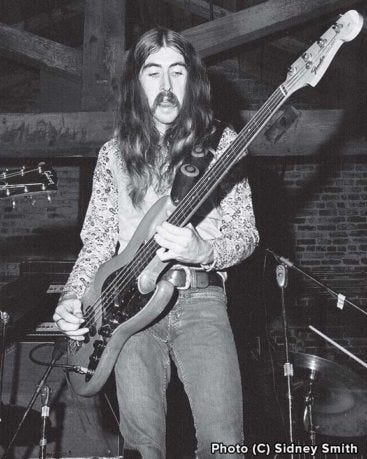
Some of my ABBsolute favorite playing of Berry’s is in the first half of “Mountain Jam,”3 where Berry and Dickey are parrying and thrusting.
Dickey’s solo starts about 7:27 and the two of them just gallop along along together…
About 9:02-ish, they begin a new conversation. Dickey will say something, Berry will answer him in a way that prods Dickey a little further along.
They go along like this for a minute and about 10:14, Dickey, Berry, and Duane begin a three-part harmony.
The jam takes a turn at 11:00ish and begins a 2+ minute stretch of some of my favorite Allman Brothers playing of all time.
The band provides everything Dickey and Berry need to just soar. Duane lays down rhythm and short lead riffs over rock solid drums. Gregg slathers B3 gravy all over everything.
Everyone’s hittin’ the note, individually and collectively.
Heavenly music
And that final 1:20 going into the drum jam is not just Dickey’s gorgeous, melodic bit of momentary composition.
Berry Oakley is writing that brilliant piece of music right along with him.

As I wrote in Play All Night! Duane Allman and the Journey to Fillmore East:
“They are so in sync that the result sounds less like six musicians improvising and more like a classical music ensemble. Listening almost feels like eavesdropping on an intense conversation; the music sounds that intimate.”
Here’s the full “Mountain Jam” from March 13, 19714
More on Berry from Long Live the ABB
Here’s two pieces from the archive.


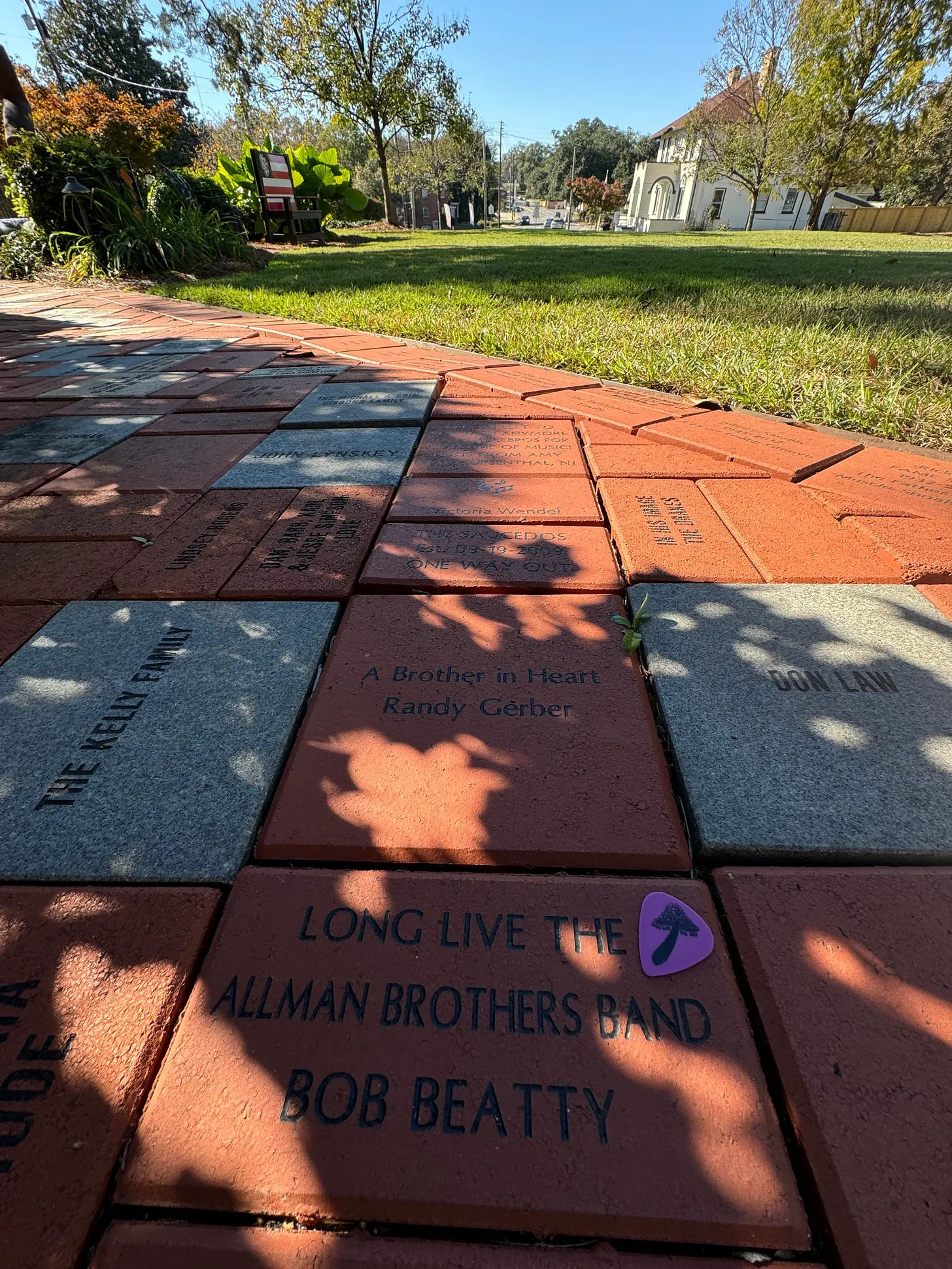
Originally the Blues Messengers, one of two groups with that name in Florida, the other operating out of Miami.
Mahavishnu Orchestra influenced me to such an extent that I was unable to listen to anything else after watching this video below and catching the 2017 Meeting of the Spirits tour with McLaughlin and Jimmy Herring. That included the Allman Brothers Band. Yep, I went through about a 3-month span as I prepared for my dissertation DEEP into one of the greatest jazz bands in history.
The entire second half of “Mountain Jam” as well, which will be played at my funeral as I believe it’s what Heaven sounds like.
Actually the wee hours of the morning March 14, 1971.