Episode overview
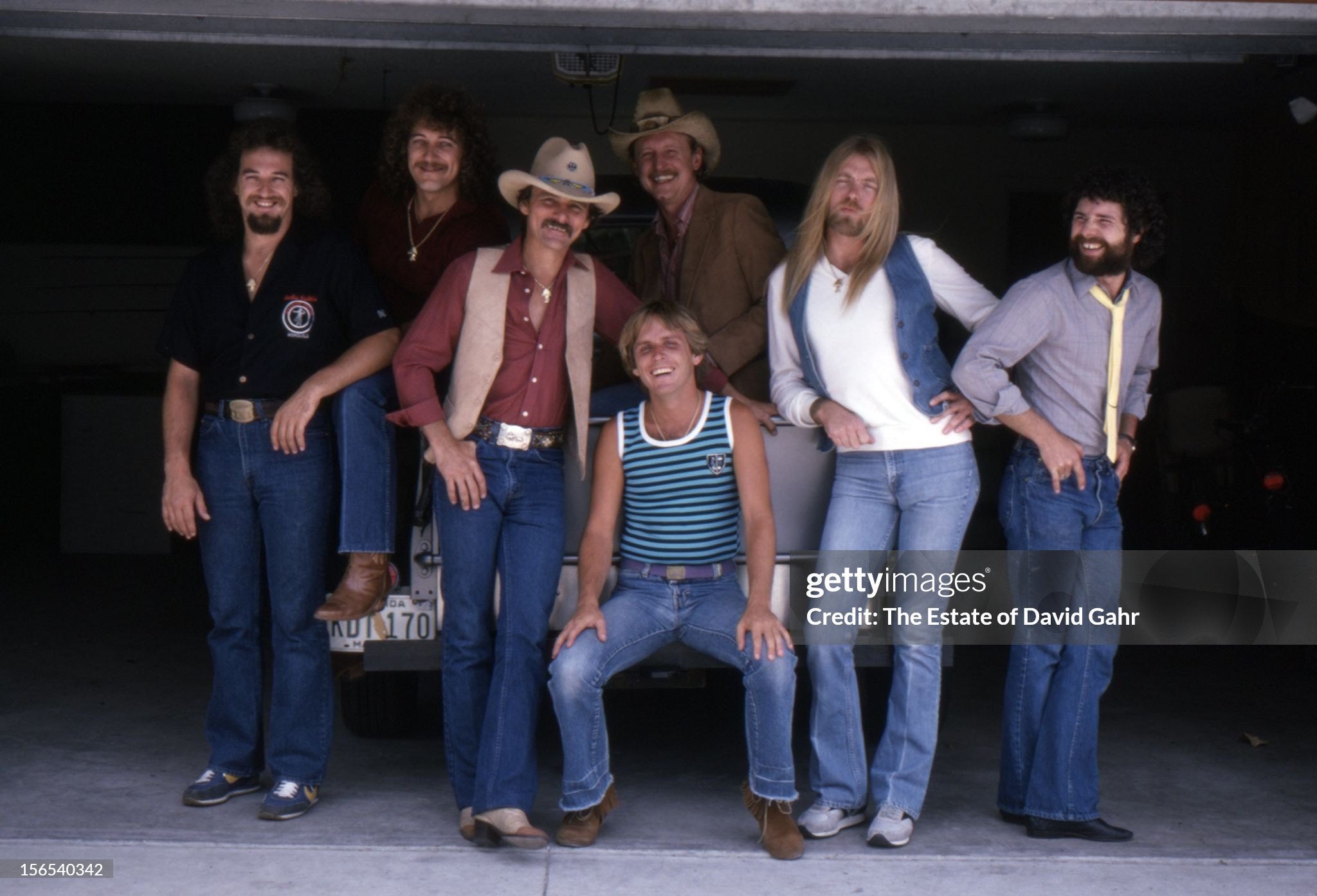
Jeff Kollath and I go back nearly twenty years—two museum professionals, two Allman Brothers obsessives, two guys who follow liner notes wherever they lead. Jeff reached out wanting to talk. I said let’s record it. Part music history seminar, part genuine friendship, all nerd joy.
Our Crossroads
Jeff and I met in the museum field but bonded over the music. We share the same methodology—find a name in the liner notes, follow it somewhere, let it teach you—and the same instinct that loving something deeply means being honest about its failures. Jeff is the guy you want on your trivia team and his music recommendations are consistently 10/10. We both believe that loving a band honestly—including saying out loud when they blew it—is the truest form of fandom.
The Conversation
I’d sent Jeff “How Did it Get this Bad? Allman Arista Artistic Apocalypse”—an assignment for Record Time magazine to write about the Arista-era Allman Brothers.1
Jeff came in ready to defend Reach for the Sky and Brothers of the Road. He listened to start to finish, and came to the same conclusion I did: there’s almost nothing to defend. What followed was a reckoning with the Allman Brothers Band’s most troubled era—and the forces that created it.
How it happened: the peak of 1973, the failed American Music Show tour of November-December 1974, the solo tours that favored Gregg over Dickey, Capricorn’s bankruptcy, and a signing to Arista Records that handed Clive Davis final say so. The result was a band stripped of its dynamics, forced to play at a pace and tempo that had nothing to do with how they made music—a band whose power has always lived in intentionality. Dickey yell-singing. Gregg disengaged. Mike Lawler’s keytar!
Grateful Dead comparison runs throughout. Both bands exemplars of the counterculture of the 60s & 70s, both on Arista, both navigating the same cultural moment. Why did the Dead survive Clive? It comes down to artistic control, infrastructure, and the difference between a band organically contemporizing its sound and a band being pushed by a label to sound like something it isn’t.
We gave the American Music Show got its due. Dickey’s November-December 1974 tour—Vassar Clements on fiddle; an R&B horn section; an acoustic bluegrass set; and glorious, psychedelic Western Swing takes on “In Memory of Elizabeth Reed”—remains one of the most ambitious and underappreciated chapters in the whole Allman Brothers story. It face-planted. We talked about why, and why the peak of 1973 made the eventual crash inevitable and devastating.
As proof, a recently surfaced complete recording of Dickey’s American Music Show from Santa Monica on December 11, 1974—Dickey’s birthday. It deserved to be heard, so I put it out into the world.
And we close where we started: loving this band means being willing to say when they blew it. The Arista records are the proof. The reclamation—Seven Turns, Shades of Two Worlds, everything that followed—is the payoff.

Resources
longlivetheabb🍄com
Vitamin ABB: Artistic Apocalypse https://www.longlivetheabb.com/p/vitamin-abballmans-artistic-apocalypse
I finally did it…I listened to the Allman Brothers’ Arista albums
The ABB’s Worst Album https://www.longlivetheabb.com/p/the-abbs-worst-album
Bob Beatty, Play All Night: Duane Allman and the Journey to Fillmore East https://www.amazon.com/dp/0813069505
Scott Freeman, Midnight Riders: The Story of the Allman Brothers Band
Alan Paul One Way Out: The Inside History of the Allman Brothers Band
Bill Janovitz, Leon Russell: The Master of Space and Time’s Journey Through Rock & Roll History


Record Time is the print-only music rag by Scott Soriano, one of my favorite follows in the online world. Issue #4 is in production. I’ll let y’all know when you can order a copy. I will also share a one-time digital edition to paid members of Long Live the ABB: Conversation from the Crossroads. Stay tuned.