

An Allman Brothers Story: In which a rock & roll band with a legendary run of albums signs with soft rock giant Arista and makes 2 crummy records while watching their band die a slow death
An Allman Artistic Apocalypse at Arista

Brought to you by the members of Long Live the ABB: Conversation from the Crossroads (paywall removed for this one).
Clive Davis passed away June 22, 2026 at the age of 94. Though he was lauded for prowess as a record label executive at Columbia Records before founding Arista in 1973.
That’s the crossroads where Davis and the Allman Brothers Band meet—an ABBsolute travesty for the band, resulting in two pretty awful records and a second break-up.
Here’s my take on the Arista error.
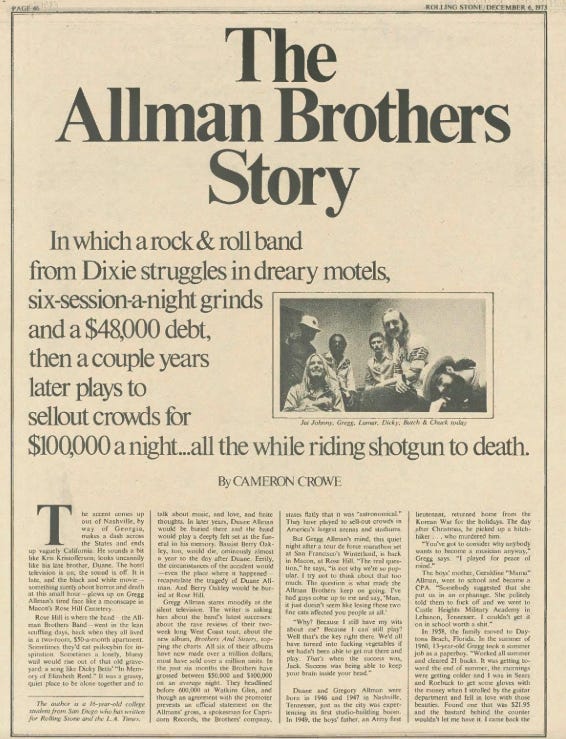
You may recognize the title and cover page above. It’s Cameron Crowe’s 1973 Rolling Stone cover story.1 Years later, Crowe turned his experience into Almost Famous.
Crowe caught the band at their zenith. It’s a wonderful piece.
My article’s title page is a clever adaptation by Record Time editor Scott Soriano. My essay covers the band’s nadir. The two worst records in the catalog. Reach for the Sky (1980) and Brothers of the Road (1981).
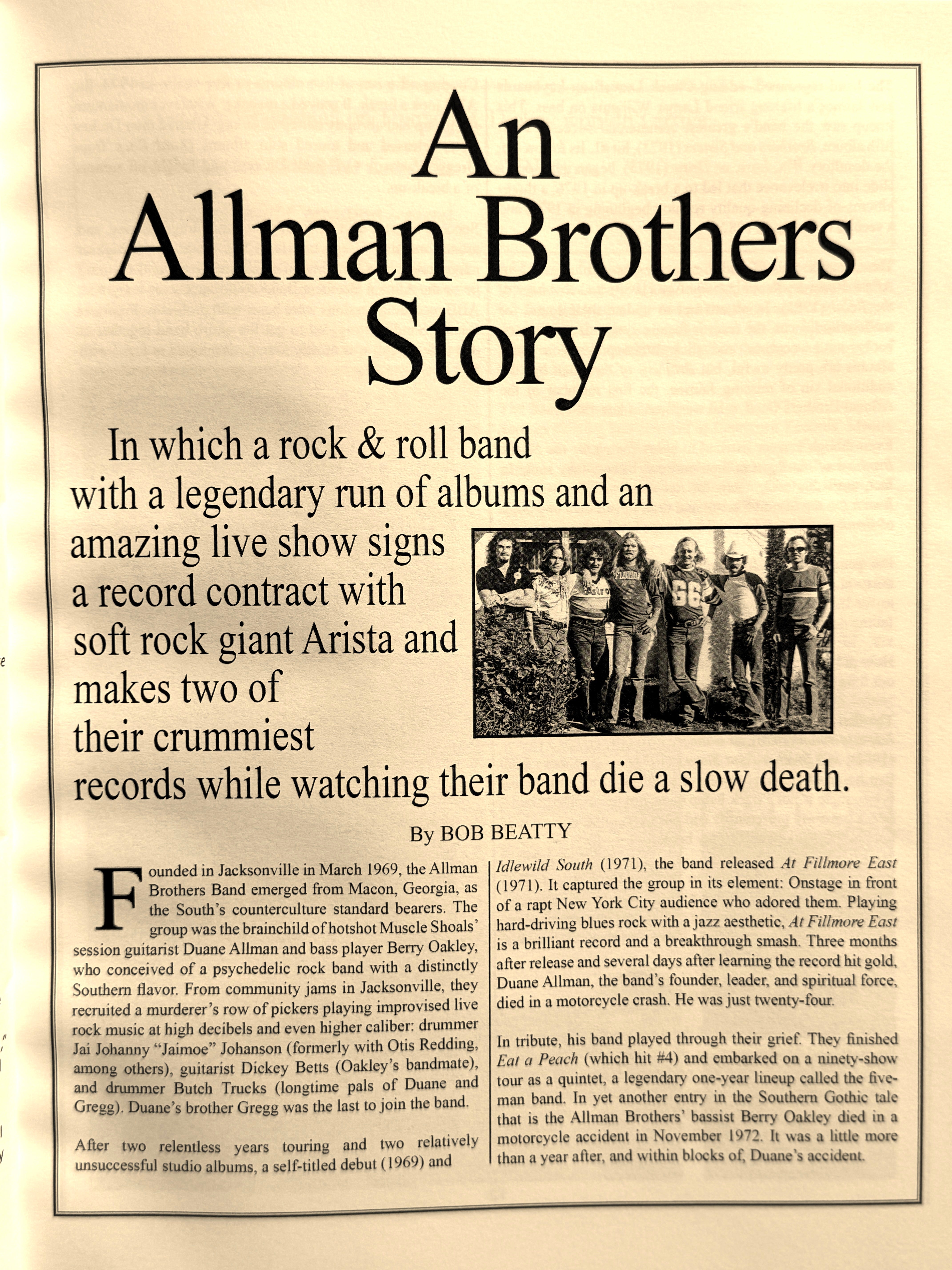
This piece originally appeared in Record Time
Scott and I bandied about several topics before we landed on the Arista era/error. He’s pretty strict on the print-only part of the RT equation, but we agreed I could send it out to y’all knowing some of you might want to add Record Time to your reading stash.
Get yers.
Record Time No. 4 is 112 pages long, perfect bound. It is $15 retail (plus shipping for mail order). Wholesale price for stores, mail orders, and distributors is $8.50.
An Allman Brothers Story
In which a rock & roll band with a legendary run of albums signs with soft rock giant Arista and makes 2 crummy records while watching their band die a slow death
An Allman Artistic Apocalypse
Even though I’ve never listened to either Reach for the Sky or Brothers of the Road in their entirety, I know they suck. In fact, until this assignment, I only owned Reach for the Sky on 8-track and didn’t even own any copy of Brothers of the Road.2
Backstory
Founded in Jacksonville in March 1969, the Allman Brothers Band emerged from Macon, Georgia, as the South’s counterculture standard bearers. The group was the brainchild of hotshot Muscle Shoals session guitarist Duane Allman and bass player Berry Oakley, who conceived of a psychedelic rock band with a distinctly Southern flavor. From community jams in Jacksonville, they recruited a murderer’s row of pickers playing improvised live rock music at high decibels and even higher caliber: drummer Jai Johanny “Jaimoe” Johanson (formerly with Otis Redding, among others), guitarist Dickey Betts (Oakley’s bandmate), and drummer Butch Trucks (longtime pals of Duane and Gregg). Duane’s brother Gregg was the last to join the band.
After two relentless years touring and two relatively unsuccessful studio albums, a self-titled debut (1969) and Idlewild South (1970), the band released At Fillmore East (1971). It captured the group in its element: Onstage in front of a rapt New York City audience who adored them. Playing hard-driving blues rock with a jazz aesthetic, At Fillmore East is brilliant record and a breakthrough smash. Three months after release and several days after learning the record hit gold, Duane Allman, the band’s founder, leader, and spiritual force, died in a motorcycle crash. He was just twenty-four.
In tribute, his band played through their grief. They finished Eat a Peach (which hit #4) and embarked on a ninety-show tour as a quintet, a legendary one-year lineup called the Five-man band. In yet another entry in the Southern Gothic tale that is the Allman Brothers’, bassist Berry Oakley died in a motorcycle accident in November 1972. It was a little more than a year after, and within blocks of, Duane’s accident.
The band regrouped, adding Chuck Leavell on keyboards and Jaimoe’s lifelong friend Lamar Williams on bass. This lineup saw the band’s greatest commercial success. Their fifth album, Brothers and Sisters (1973), hit #1. Its follow-up, the desultory Win, Lose, or Draw (1975), began a slide into irrelevance that led to a break-up in 1976, a three-albums-of-declining-quality reunion beginning in 1979, and a second break-up in 1982.
I don’t want to listen for the same reason nobody wanted to see Willie Mays falling down in the outfield with the Mets.
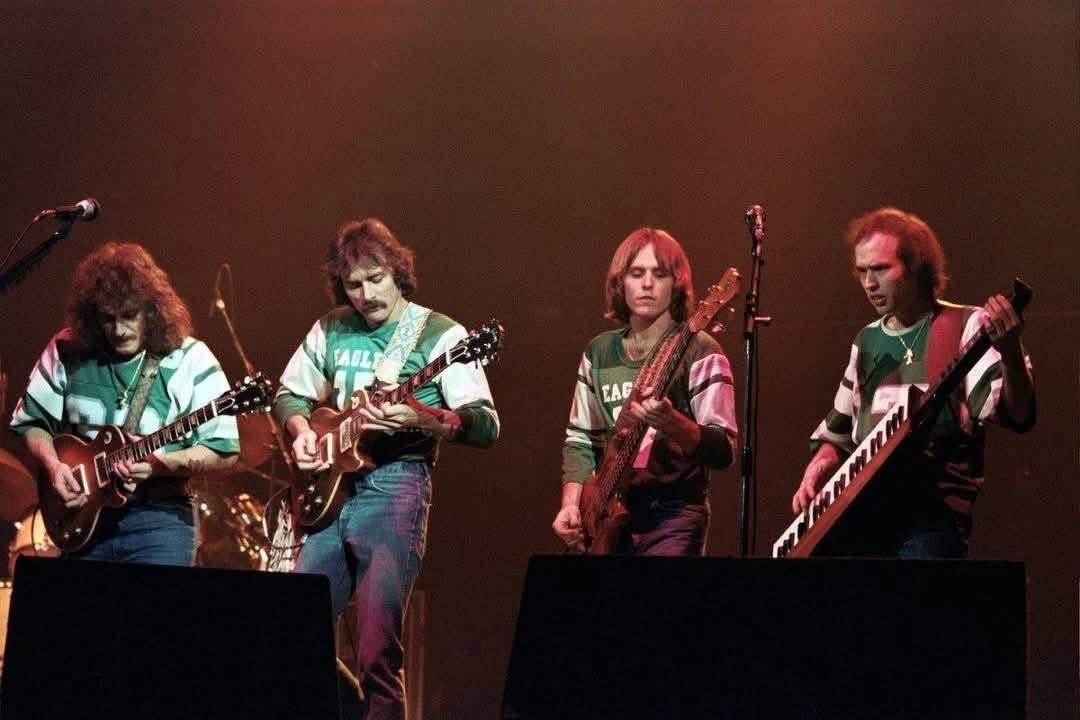
The group’s artistic nadir encompasses two albums for Arista Records: Reach for the Sky (1980) and Brothers of the Road (1981). In an attempt to update their sound for modern audiences, the records feature synthesizers, keytars, background vocalists, and slick 1980s production. Both albums are pretty awful, but Brothers of the Road has the additional sin of missing Jaimoe, the first member of the Allman Brothers Band, who was fired in late 1980.
Even though I never listened to either Reach for the Sky or Brothers of the Road in their entirety, I know they suck. In fact, until this assignment for Record Time, I only owned Reach for the Sky on 8-track3 and didn’t even own any copy of Brothers of the Road, and I love the band.
I’m gonna take my first deep dive into these records after thirty-plus years of fandom, but I don’t want to. I don’t want to for the same reason nobody wanted to see Willie Mays falling down in the outfield with the Mets.
How did it get this bad?
That’s what I’m gonna try and sort out.
I figured I’d start at the beginning.
The first five albums — The Allman Brothers Band (1969), Idlewild South (1970), At Fillmore East (1971), Eat a Peach (1972), and Brothers and Sisters (1973) — give more than five hours of some of my favorite music of all-time. Even better, there is not a track I skip on any of them. Not a single one. I have my preferences and not every song is a classic, but nothing is skippable in my book.
Next: The first “worst” Allman Brothers Band record, Win, Lose, or Draw (1975). I own a crisp copy, several actually. This one was a perennial in the cutout bins and remains less than $10 at most record stores. There’s a reason for that. It’s simply not very good.
How did it get this bad?
It starts here.
In 1973, the band was one of the top groups in the nation. Brothers and Sisters went to #1 on the charts; the song “Ramblin’ Man” hit #2. They performed a string of shows with the Grateful Dead including the epic Summer Jam ’73 at Watkins Glen, New York, with 600,000 people in attendance. Then it all came crashing down.
Coming off a run of five albums in five years, in 1974, the ABB took a break. It proved a mistake. Whatever momentum the group had abruptly halted as Gregg Allman, then Dickey Betts released and toured solo albums (Laid Back from Gregg, Highway Call from Dickey) and fought off rumors of a break-up.
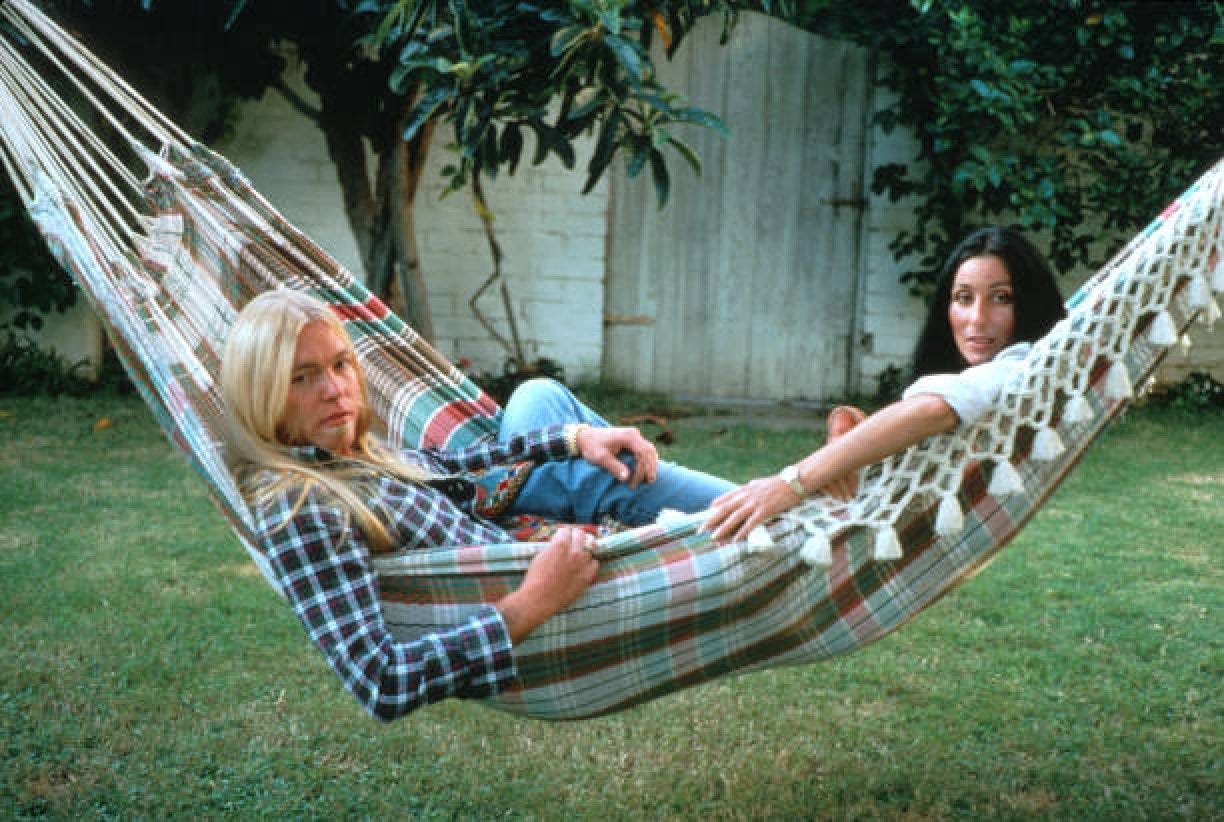
Success begat a host of other problems: drugs, money, and artistic malaise. Gregg married Cher, a star of the highest magnitude with a dizzying level of fame far beyond anything he or the Allman Brothers Band could have ever imagined. ABB recording sessions were beset with problems. Producer Johnny Sandlin struggled to get the entire band together at one time. Gregg was mostly absent, decamped to L.A. with Cher. Ever temperamental, on Thursdays, Dickey wouldn’t arrive to the studio until after Kung Fu – the TV show starring David Carradine – aired.
Win, Lose, or Draw reflects this lack of inspiration. Only two songs from the album stayed in the band’s repertoire, “Can’t Lose What You Never Had” and “High Falls.” Gregg’s “Nevertheless” is much better than I remembered. “Win, Lose, or Draw” is not. A beautiful song, Gregg overdubbed his vocals from L.A. while he recovered from a cold or a bit of the cocaine drip.
All three of Dickey’s vocals lack the punch of early Allman Brothers. Billy Joe Shaver’s “Sweet Mama” seems more fitting on Highway Call or his Great Southern albums. “Just Another Love Song” is a groovy little tune that also belongs on Highway Call. Dickey’s third vocal, “Louisiana Lou and Three Card Monte John,” is my least favorite song from the 1969-76 era.
Though it sold well at release, Win, Lose, or Draw was ultimately a flop. Capricorn Records and its co-owner Phil Walden depended on the album’s success: The Allman Brothers were its bellwether. The album’s failure spelled doom for the heavily leveraged label, which would close its doors by the early 1980s.
And then, of course, were the drugs. The group was never shy about its intake. Drugs impacted members individually, but they didn’t affect the band’s creativity, until now. Gregg’s drug habit, in particular, wreaked havoc. Keeping him supplied, alive, and getting him to the gig was the job of Scooter Herring.
“What Gregg did was bullshit,” Betts told a reporter.
The band played its last show May 4, 1976. On May 30, Scooter Herring was arrested at Capricorn Records’ Macon offices for drug trafficking. The feds were after Herring’s supplier, pharmacist Joe Fuchs. Herring and Fuchs were associates of J.C. Hawkins, the Middle Georgia kingpin of the Dixie Mafia — a loose collective of Southern organized crime with deep ties to southern law enforcement agencies.
To account for the ounces of pharmaceutical cocaine Allman bought through Fuchs, Fuchs and Herring staged a robbery of the pharmacy. The investigation of the crime soon included the feds, who were already tailing Hawkins. In June, Gregg Allman — under heavy guard and with a $100,000 bounty on his head courtesy of Hawkins — testified in federal court against Herring. Herring pled the Fifth and earned a seventy-five-year sentence (later commuted).
Gregg’s unreliability, obsession with Cher, and absence in Los Angeles already had him on the outs with his bandmates. They were now ever-more furious at Gregg for testifying against a brother. “What Gregg did was bullshit,” Betts told a reporter.
The trial was the final straw. The band had been dodging rumors of a breakup for a year. By August 1975, Capricorn Records confirmed the breakup. Jaimoe said he would never play with Gregg again. Everyone went their separate way.
How did it get this bad?
A clue to the band’s musical decline lies in what the band members were up to after ABB’s breakup.
It’s an interesting detour. It’s also an excuse for my every-couple-of-years listen through Dickey’s two Great Southern albums — the self-titled debut (1977) and Atlanta’s Burning Down (1978), both on Arista.


Both albums are weak, though there are some songs that might even thrive with the Allman Brothers treatment. A fresh listen validates my belief that Dickey Betts needed the Allman Brothers Band as his chief collaborators. They brought out the best in him.
Gregg’s Playin’ Up a Storm (1977) is among my least favorite of his solo records. Its way-too-slick-L.A.-production results in saccharine takes of the Allmans’ “Come and Go Blues” and his gorgeous ballad “One More Try.” Fortunately, I have Sea Level’s 1977 debut as a palate cleanser. Sea Level is half of the recently imploded Allman Brothers Band, with lifelong friends Jaimoe and Lamar Williams holding down the rhythm section. What a wonderful album!
Every single one of these records can be found in the discount bin and they’re all much better than the ABB’s Arista records.
How do I know when I haven’t even listened to them?
I just do.
Time for Enlightened Rogues (1979).4 This one is like comfort food. I don’t play it much, but it is another “don’t skip” album for me (though I’m not nuts about either “Crazy Love” or “Blind Love”). The band’s first album in four years, Enlightened Rogues is a really fun record. The reunited group was feeling good. Super engineer Tom Dowd was back behind the boards. The album charted at #9, while “Crazy Love” hit #28. Gregg’s “Just Ain’t Easy” is one of his best. The band’s last album for Capricorn, Dickey sued the label for back royalties several years before Enlightened Rogues was even released.
How did it get this bad?
In search of a new label, the Allman Brothers signed with Clive Davis’s Arista Records, home to such rock titans as Foreigner, Air Supply, and Barry Manilow.
Dickey’s band Great Southern was also on Arista. Same with the Grateful Dead. It could have been a great pairing, two old friends, now labelmates, touring with updated, new material. But Dead’s camp thought Gregg a narc, and no collaborations materialized. Even worse were Clive Davis’s abysmal efforts to modernize the Allman Brothers Band sound.
The first Arista album, Reach for the Sky (1980) begins with a Dickey Betts tune, “Hell & High Water.” A gospel sounding intro a-la “Amazing Grace” is a promising beginning. It’s a Gregg and Dickey duet like “Try It One More Time.” That’s where comparisons stop. The song sucks. It’s a poor man’s “Louisiana Lou and Three Card Monte John” and a continuation of Enlightened Rogues, just appreciably speedier. (The album is brought to you by cocaine and nitrous oxide.)
It’s gonna get worse. I know.
“Mystery Woman” is a mediocre Gregg collaboration with “Dangerous” Dan Toler. A goddamn synthesizer undergirds the entire groove. Harmony guitar climb-ups mimic every other Dickey/Dangerous Dan collaboration. And then a weak outro solo. Terrible.
“From the Madness of the West” is one of the few tracks I’ve listened to more than once. It’s my least favorite Dickey instrumental, partially because it’s at a tempo that makes my heart race like I ate a bunch of ephedrine. Oh god, the keytar solo! It’s just terrible. I hate it. Make it stop. Note: “Madness” is also the only Allman Brothers Band song with a formally composed drum part. Would be much cooler if it wasn’t for the synthesizer/keytar playing. Sounds like Flock of Seagulls.
“I Got a Right to Be Wrong” begins with the Dickey “Crazy Love” slide riff. This is just not a very good song. A generic boogie. Nothing special at all. “Angeline” is not that bad a song until the background singers hit and I remember this isn’t a Gregg Allman solo album. It’s an Allman Brothers album and background singers just don’t belong.
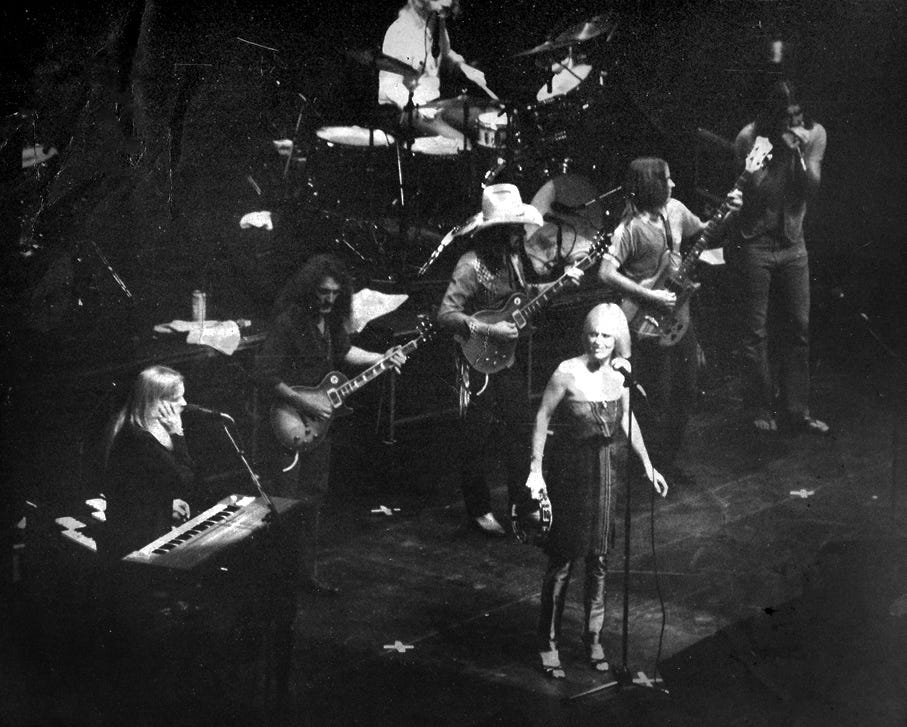
“Famous Last Words” is a cowrite with Dickey and Bonnie Bramlett. Nice guitar solo from Betts. Song isn’t half bad. “Keep On Keepin’ On” is a Betts/Toler cowrite with Gregg on vocals. It’s a disco song and not a very good one either. What a shitty chorus.
“So Long”: The opening makes me wonder if I accidentally queued up Barry White. It’s an attempt to do something like “Just Ain’t Easy” from Enlightened Rogues. They failed. And not just because of its horrible chorus. No harmonica can salvage this terrible, dated production. The song is two different grooves that don’t match at all mixed together. There is, however some tasty picking on this outro.
Conclusion: Reach for the Sky has 2.5 songs I would consider not bad: “Famous Last Words” and “From the Madness of the West.” Perhaps with Tom Dowd in the producer’s chair, the two songs could have been salvaged for Enlightened Rogues. The half song is the outro on “So Long” — an otherwise forgettable number.
This is unequivocally the ABB’s second worst album. It’s well behind Win, Lose, or Draw, as none of the songs on Reach for the Sky are anywhere close to as good as “Can’t Lose What You Never Had” or “High Falls” (much less “Nevertheless” or “Sweet Mama.”)
Time for Brothers of the Road (1981).
I hate this album even though I have never listened to it.
The band’s second Arista release, Clive Davis exercised his right of first refusal on a producer and saddled the band with John Ryan, who’d made his name with Styx. Ryan pushed the ABB to modernize their sound. It is an unmitigated disaster.
An ominous, Molly Hatchet-like intro kicks off “Brothers of the Road.” That’s not good, it’s cliché. I don’t know what’s worse, the disco backing or the wretched chorus. Terrible track.
“Leavin’,” one of Gregg’s two songs on the album, ain’t half bad. It’s the cut they played on Saturday Night Live in January 1982. Fitting, as that performance was the beginning of the second break-up. “Straight from the Heart” has a synth intro. Gregg’s vocals drowning in reverb. Yacht rock. Bad yacht rock at that.
“The Heat Is On” begins with Dickey’s “Crazy Love” slide riff (again). Another generic song, but I could see it maturing into something that appeared on Seven Turns, like “Low Down Dirty Mean” or “Good Clean Fun,” that kind of shit. This is not bad. But not bad isn’t really the Allman Brothers standard.
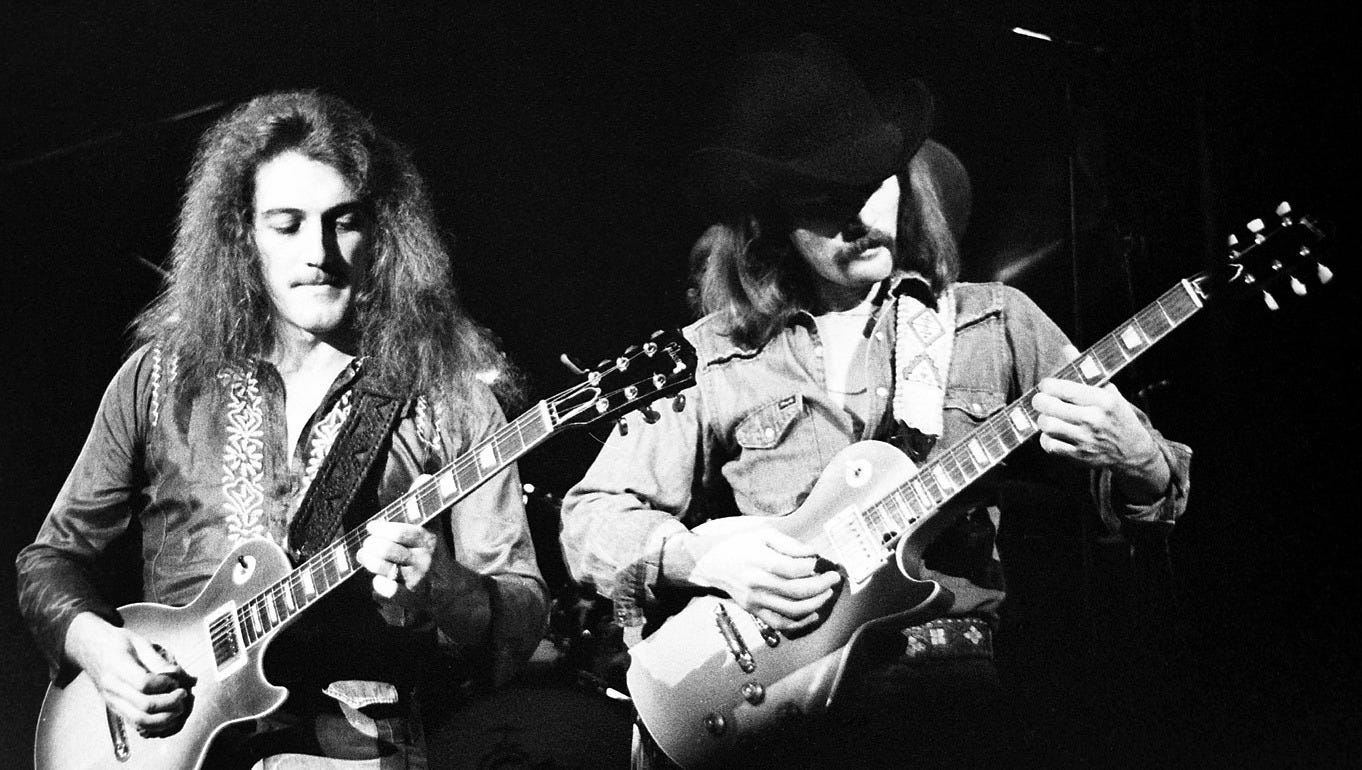
“Maybe We Can Go Back to Yesterday” is more yacht rock. Sounds dated. Boring. This is a keyboard jam; the Allman Brothers are a guitar band. At least it’s not synth-heavy. (I can’t believe I just typed that sentence.) It’s the last song Dickey would write with “Dangerous” Dan Toler, his guitar partner going back to 1977 and Great Southern. When the Allman Brothers broke up in 1982, Toler joined Gregg’s band. He rejoined Dickey in 2002.
“The Judgment” sounds like “Pegasus,” the Betts instrumental from Enlightened Rogues with Dickey’s vocal channeling Ronnie James Dio. “Two Rights” yet another boring melody with a synth-heavy arrangement. Background vocals evoke a 1980s beer commercial. This song is fucking terrible.
“Straight from the Heart.” Gregg’s vocals drowning in reverb. Yacht rock.
Bad yacht rock at that.
“Never Knew How Much”: I know this from Gregg’s guitar/vocal demo from the outstanding, long-out-of-print One More Try: A Gregg Allman Anthology. This version has a yacht rock sax solo by Southern rock royalty, Jimmy Hall of Wet Willie. The solo ruins a really good song.
“Things You Used to Do” is too much disco, too little feel. Recycles the “Wasted Words” outro. Not bad, I guess. “I Beg of You”: A 1958 Elvis B-side. Proof that Gregg Allman can sing the phone book. Another not bad.
Verdict: Brothers of the Road earns its reputation as a shitty album.
It’s the Allman Brothers Band trying to be something they’re not. The material is lackluster and crappy. The execution is poor. Robert Palmer, who two years earlier wrote a glowing Rolling Stone cover story on the 1979 reunion, said the record was “lacking in personality,” the band “sounds like it’s marking time.” Creem called it “mellow ooze,” adding, “Gregg sounds tired here.”
How did it get this bad?
The material sucked.
The band uninspired.
They lacked creative control.
Said Dickey, “Clive Davis ran a producer in on us. And they mixed out all of the guitar harmonies and tried to really disco-pop it up.” Tried to? They succeeded. Brothers of the Road not only has disco, it’s terrible disco.
How did it get this bad? Shitty material, a shitty label, and a shitty attitude all contributed. But the Allman Brothers were the flagship Southern rock band, and the genre had become an unintentionally ironic parody. They titled Brothers of the Road “in honor of the musicians who have made Southern rock a traditional art form in American music.”5 It was unfortunate timing. Southern rock was rapidly falling out of favor. Remembered Betts, “People were telling us we should never use terms like ‘Southern rock’ or that we couldn’t wear hats or boots onstage, that it was embarrassing to a modern audience.”
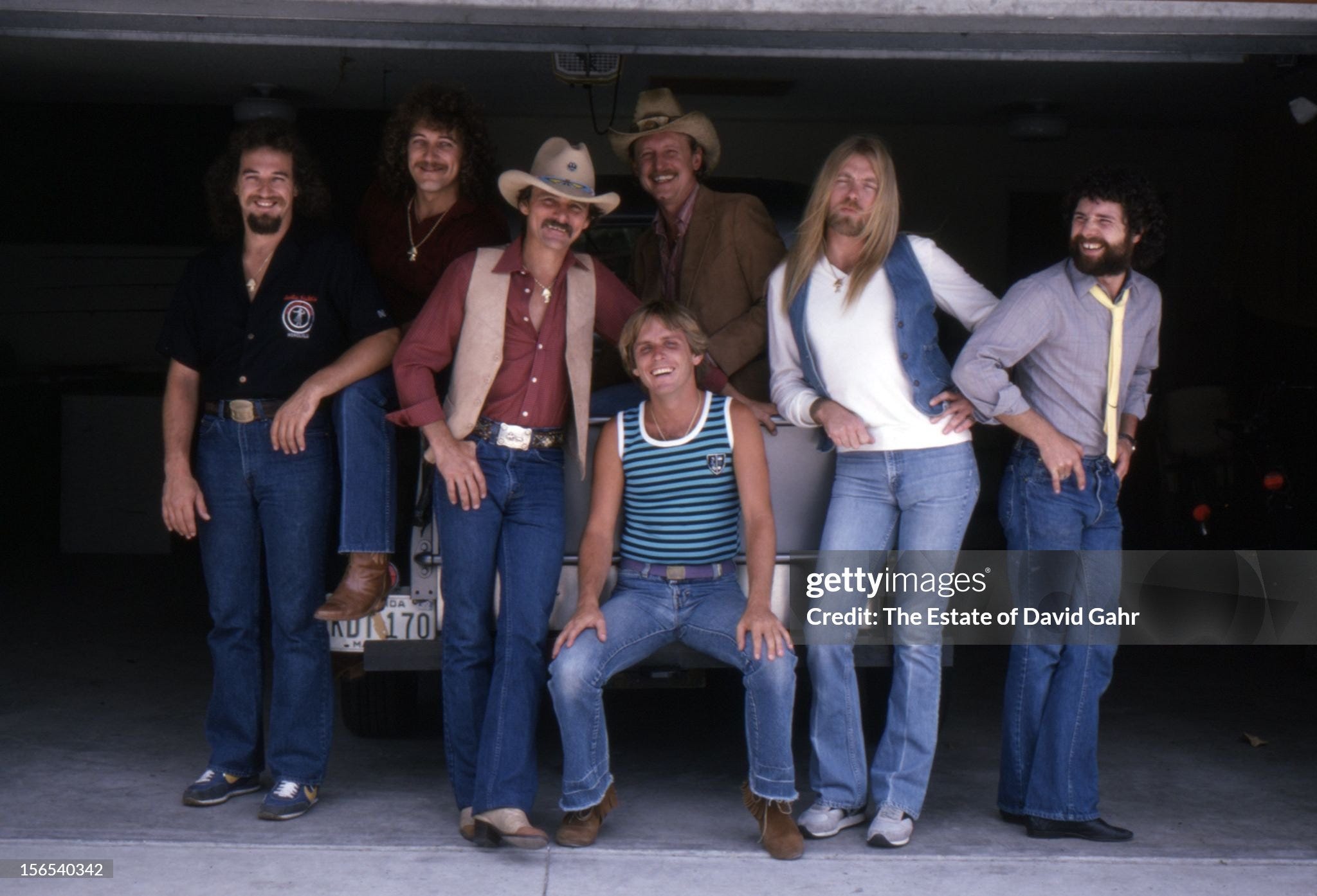
In 1982, the band added old friend Chuck Leavell to the lineup and recorded tracks for a follow-up album. Among the songs Davis rejected were two that later reappeared on later albums —“Let Me Ride” (Seven Turns, 1990) and “Anything Goes” (Gregg’s I’m No Angel, 1987). Proving claims of Davis’s tin ear, “Anything Goes” reached as high as #3 on the Billboard Album Rock Tracks chart in 1987.
How did it get this bad?
Shitty material, a shitty label, and a shitty attitude all contributed.
Determined to wait out the disco craze, the Allman Brothers Band quietly disbanded in 1982. They played several one-off events in the ‘80s and Dickey and Gregg toured together as well. In 1989, the Allman Brothers reunited and toured behind the career-spanning Dreams box set. Two new additions, Warren Haynes on guitar and Allen Woody on bass, gave the band a dose of new blood that spawned three studio and two live albums. The reunion ultimately spanned twenty-five years with several lineup changes, including a bitter divorce with Betts in 2000.
How did it get this bad?
The Allman Brothers Band alone hold responsibility for the wretched artistic decisions they made in 1980 and 1981.
And despite being a shit-hot live band, their decision to fold in 1982 was wise, sitting out the 80s as the popularity of Southern rock/rock and blues-based music continued to wane. The hiatus gave them distance from the Arista debacle and the chaos of their mid-Seventies break-up.
The band reunited in 1989 with a determination never again to compromise artistically and reclaimed their reputation as one of America’s greatest bands. They succeeded. Unlike 1975 and 1982 when they faded away, the Allman Brothers went out on their own terms, October 28, 2014 at the Beacon Theatre in NYC. The mammoth, three-set show featured no songs from Enlightened Rogues, Reach for the Sky, or Brothers of the Road.
Brought to you by the paid members of the Long Live the ABB community.
🍄MUSHROOM🍄MAGICIANS🍄 Steve Marshall, Brent W. Hammond, Ken Lupson, Laura McCarty
🍑 PEACH 🍑 PALS 🍑 Allen Barnes, Art Dobie, Baileys Mike, Bob and Laura, Bob Johnson, Brent Pruner, Bruce Miles, Buddy Lewis, Cabinetsales, Caroline Doolittle, charlie2541, Chuck Zumwalt, Clifford Morse, Craig Stephens, Cwktwo, Danbookin, Dennis Newton, Denny, Ed Ashton, Ed Pokorny, F. D., Frank Young, Gary Nagle/Chairman Wonwayout, Gary Smith, Gary Williamson, George Holman, Hlnbkt, Irishbeatz, James Reynolds, James Yerrill, Jcsarphie, JD Guitar, Jeff Kushmerek, Jeff Schein, Jerry K, JoaquinDinero, Joe Sokohl, Joel Berger, Joel Tanzer, John Delaney, John Dolan, John Haughey, Jordan David, Joseph Lilly, Kenton Lee, Kevin Harper, Kevin Walker, Kurt Nielsen, Mark Leitner, Martha Haynes, Mike Clark, Peter Poulos, Phillip Page, Preston Root, Randy Woodall, Ray Tillman, Robert Porter, Rose Brandt, sswoger, Stanleyglennie8, Surrender Cobra, Taylor Kropp, Tim Langan (Hot ‘Lanta Tim), Tina Christopher, Tom Pragliola, Tony Gioia, Wade McCurdy, Wiszowa



I’m super pleased that we were able to use some snaps from my pal (and paid member) Art Dobie in the piece.
Also the first time their most iconic logo appears.

I don’t even own an 8-track player, I was just being ironic. Plus, it was cheap ABB swag.

Great job documenting that woebegotten era. The “keytar” photo alone is priceless.