
Miles Davis at 100: How jazz became the Allman Brothers Band's not-so-secret weapon

Miles Davis would have turned 100 years old today. Though the world tosses around the term “Greatest of All-Time” (GOAT) way too easily, Miles is definitely under consideration for the title in my book. My argument falls apart when you ask me, “If Miles is the GOAT, where’s Louis Armstrong fall?” I concede. Greatest is subjective; greatness is objective. And Miles is objectively one of the GREATEST of All-Time.
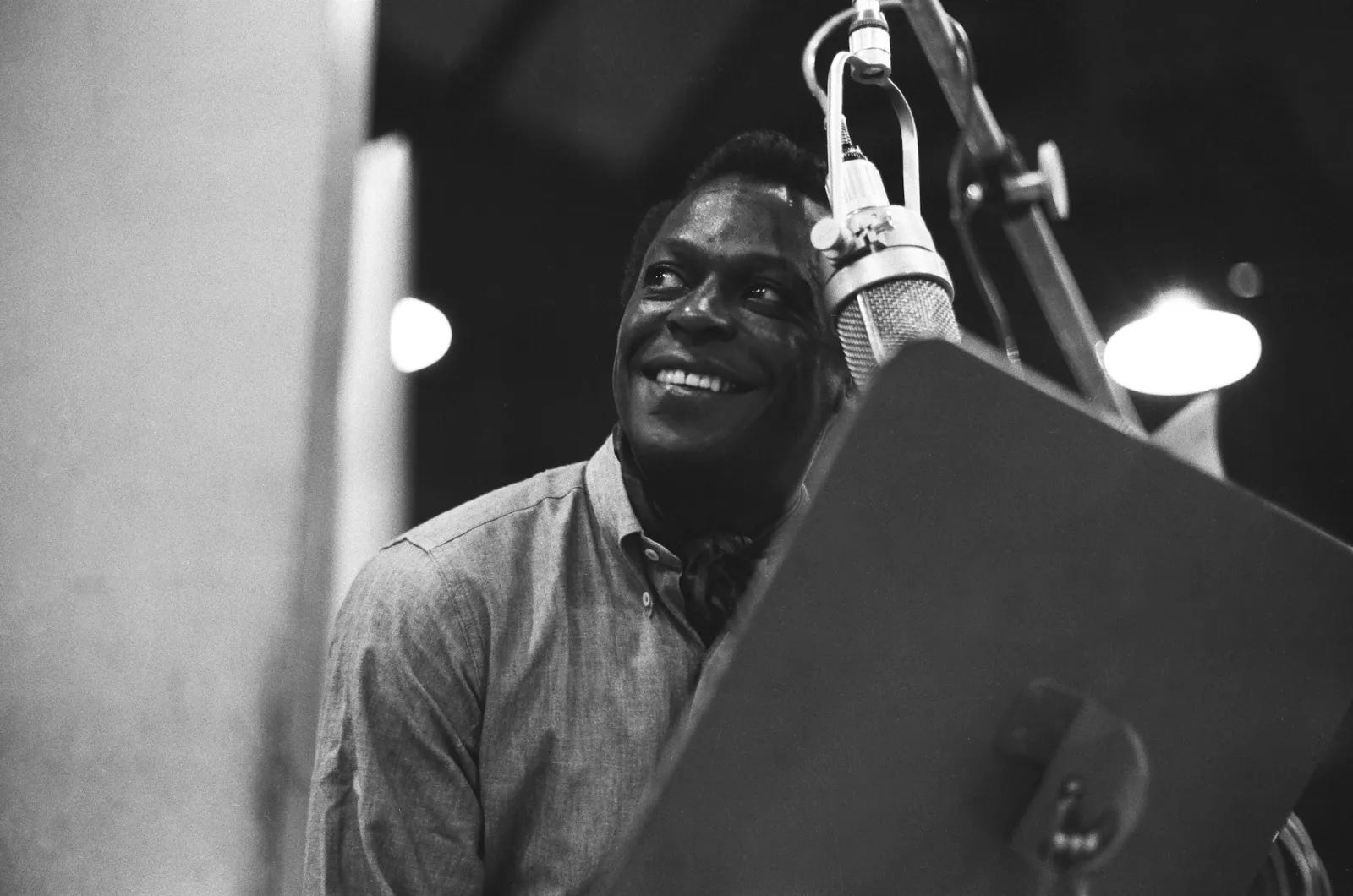
I’ve studied Miles’s influence on Duane and the Allman Brothers Band pretty extensively, from my Ph.D. dissertation, to my book Play All Night! Duane Allman & the Journey to Fillmore East, to Long Live the ABB Kind of Blue is more than the Best-Selling Album in Jazz History: It was a major influence on the Allman Brothers Band 🍄1
Everyone acknowledges Jaimoe as the one who brought jazz to the band, but as he told Alan Paul, “I’m absolutely certain that Duane had listened to Miles and Coltrane before he met me, but we did spin those a lot. His two favorite songs were Coltrane’s version of ‘My Favorite Things’ and Miles’s ‘All Blues.’ Those two songs were the source of a lot of our modal jamming, without a lot of chord changes.”2
I’ll begin with one of my favorite quotes in the entire Allman Brothers Band universe, the group’s resident jazzman.
“I used to sit in library and read Downbeat magazine. God sent Downbeat magazine to 33rd Avenue High School for me. I used to read that magazine from front to back, everything in it.” Jaimoe3
I felt the exact same way when I got into guitar and the blues (more than 40(!) years ago). I was already a history geek of epic proportions. Finding MUSIC in stories made the music even more meaningful. Since middle school, I have been devouring music—playing, listening to, thinking/writing/reading about.
God sent Jaimoe Downbeat magazine.
God sent me the Allman Brothers Band.
Music is divine.
Jazz and the Allman Brothers
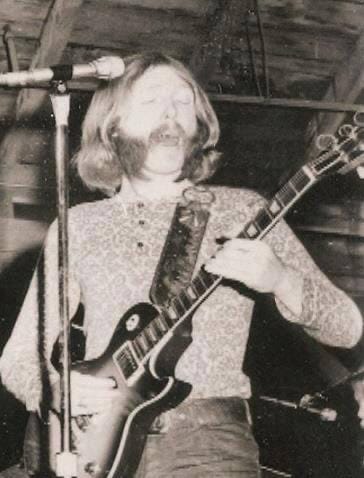
Duane Allman~Crawdaddy 1970
We listen to Coltrane, Pharaoh Sanders, Roland Kirk, and you know soloists and the cats that really get some shit together. B.B. King, Junior Wells.
All reach. Energy. And all reach. Woo! Kirk, shooo! He kills me. He can sure play those F sharps.4 Like bands, like young bands, British bands, that ain’t like it is with them old cats, they can really get their shit together.
Fine, fine artists. Ray Charles is another one. Tony Williams.
When we were first putting a group together, down south. Well, we were listening to Jefferson Airplane and the Dead’s records, we are all kicking around down south, buying records out of the Kmart and taking them home and digging them. And Frown [Jaimoe] comes along and says, “Well that’s cool—good, but take what I got over here, this collection.” They just turned us all around. We heard with them cats were doing. Knocked us out.
“Dreams” is the effect that good jazz has had on us. Those cats catch the flow, so it’s on a level man that—like if you can ever achieve, you’ll never be satisfied with nothing else. If you can get the music flowing out there, where you don’t have to listen to it, it just takes you away. That’s the way we try to do it. It’s what we want to get out of it.5
Duane Allman~WPLO-FM 1970
Complexity is the only difference between blues and jazz. It’s all the portrayal of the feelings and the soul in a medium other than words. You can either complain and say “Oh man, I really feel bad,” or you can put your sadness into a musical context and make it desirable. Nobody warts to hear anybody bellyache, but everybody wants to hear him play the blues. You can say the same things, but make it to where it’s a little less offensive to your fellow man by playing it with music Develop your talent, and leave the world with something.6
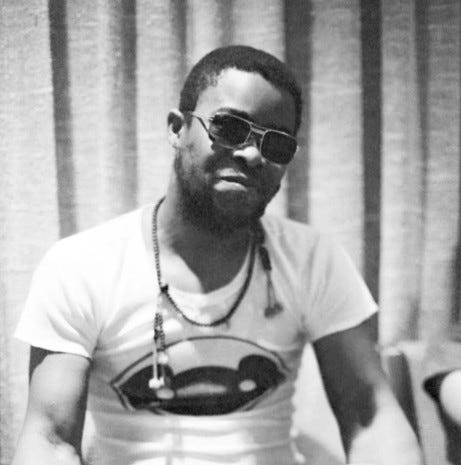
Jaimoe~Max Weinberg/Scott K. Fish 19827
Learning drums was different than playing music, Jaimoe discovered when he first saw Charles “Honeyboy” Otis in 1960. It changed his life.
I just got my set of drums. It was February 1960. February 28th. I was playing the drums and I thought I was pretty good. For what I was doing, I was pretty good. I wasn’t a damn professional or anything like that. I had good rudimental hands and I was interested in learning.
This friend of mine, Benny Lockhart, him and Lem Barney8, he told me, he said, “Hey man. You got to go on by The Throne and hear this band. They got a bad drummer over there from New Orleans.”
Well, that bad drummer turned out to be Charles Otis. Honeyboy. And man! You talking about walking around in a daze!? Jesus Christ! I mean, you only heard playing like that on records. And this was happening in Mississippi, man, in 1960.
Hearing it live? Phew! Man!
They played everything. Charles Fairley is from Pascagoula, Mississippi. Charles Otis is from New Orleans. Otis Dubonnet was the bass player and he was from New Orleans. And Duke Verrell was the piano player.
Now, everybody in that band sang. Otis, the bass player, he’d sing stuff like those Billy Eckstine kind of tunes. He didn’t even use a microphone. That’s the kind of lungs he had.
And as bad as Honeyboy was, Honeyboy sang 90 percent of the songs. And he sung everything: Ray Charles, Fats Domino. You name it, he sung it. But, he admitted, he said, “Man, Otis [Dubonnet] can sing.” He said, “‘Cause I don’t have them kind of lungs. If I don’t use that microphone,” he said, “I won’t be able to talk to you by the time I leave here.”
Those cats, man, they were playing. This is when I got hip to Coltrane too. They were playing “Giant Steps” and all that stuff, man. Horace Silver tunes. They’d do that for about an hour-and-a-half. Then Honeyboy would start singing. And he’d sing stuff like, “In the morning when the sun comes up / She brings me coffee in my favorite cup [Hallelujah, I Love Her So].” He sang it all, man.
And Charles Fairley used to sing this thing: “You always hurt the one you love / The one you shouldn’t hurt at all [“You Always Hurt The One You Love”].” He did little tunes like that.
The records that I had been listening to were Stan Kenton records, Ahmad Jamal, Miles, Coltrane, Stan Kenton, Gerald Wilson. All this stuff I’d been listening to—and hearing these cats play like that? There was four guys sitting there playing like that. And, I mean, it wasn’t on no record!
Man, it just blew me away.
Jaimoe~Rolling Stone 1999
One of my favorite Jaimoe stories.
When Otis Redding wanted to write or rehearse some stuff, he would go out to his farm. The band would come out, and he’d have a big barbecue. We were out there, and I had all my jazz records with me. I found the stereo, and Coltrane was blasting all over the yard. I guess Otis took about as much of it as he could. He told me, “Jai Johanny, all you’re doing is playing that jazz. If you can’t play none of my goddamn records, I’m not going to let you play my record player anymore!”
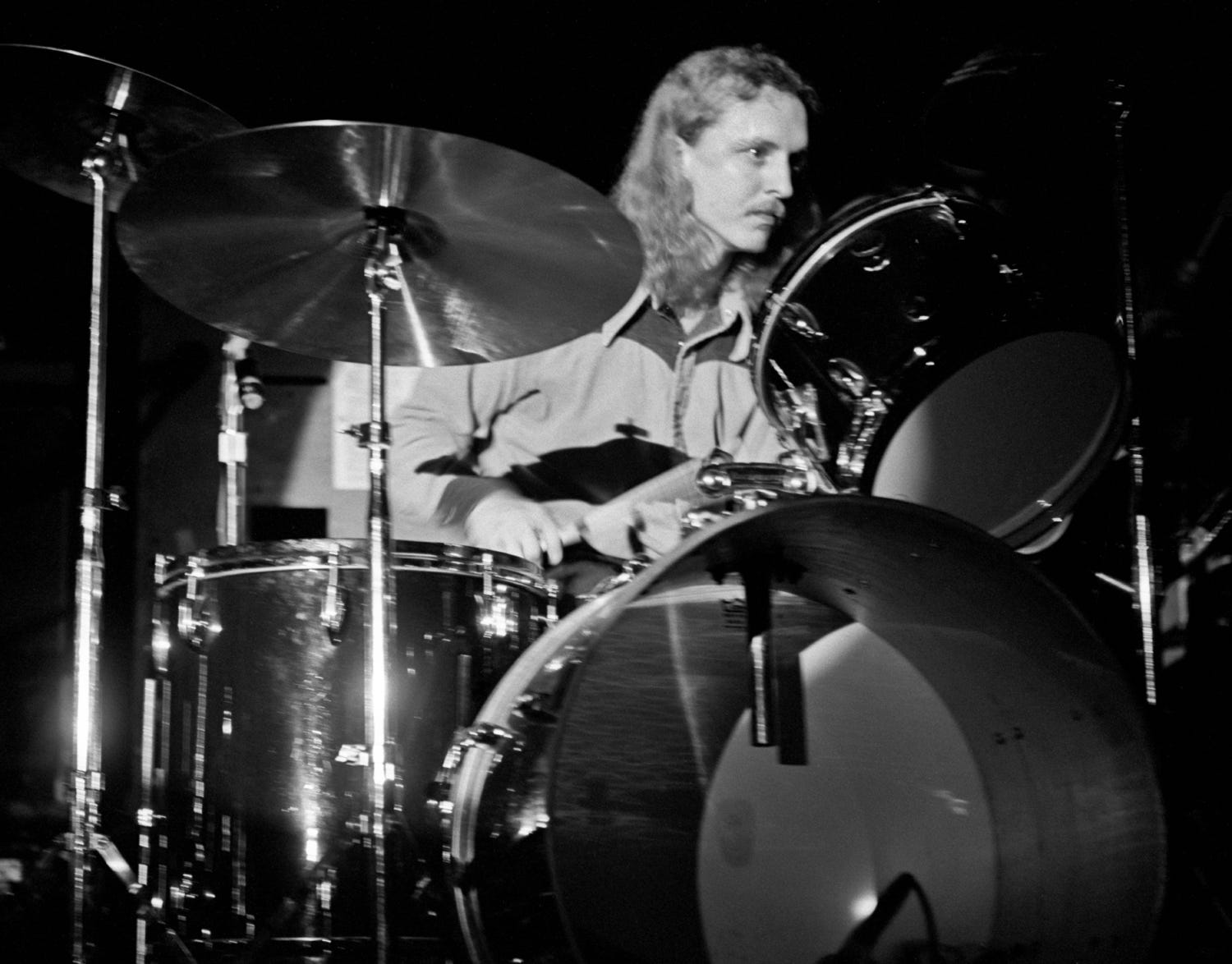
Butch Trucks~1996
Butch on how well jazz fit the Allman Brothers mélange.
As the band fell together, Jaimoe turned us on to people like John Coltrane and Miles Davis. I’d kind of grown up with a classical background and Duane and Gregg with the blues. Plus, my background was gospel. But then with Dickey with the blues and the country background, it all kind of melded.
That first year or two, all we listened to was Miles and ‘Trane and people like that in the jazz idiom. We started trying to bring that element into what we were doing, putting more of the jazz spontaneity in structure, or lack of structure into what we were doing. I think that’s the unique element we added, that, with that passion we had for playing.
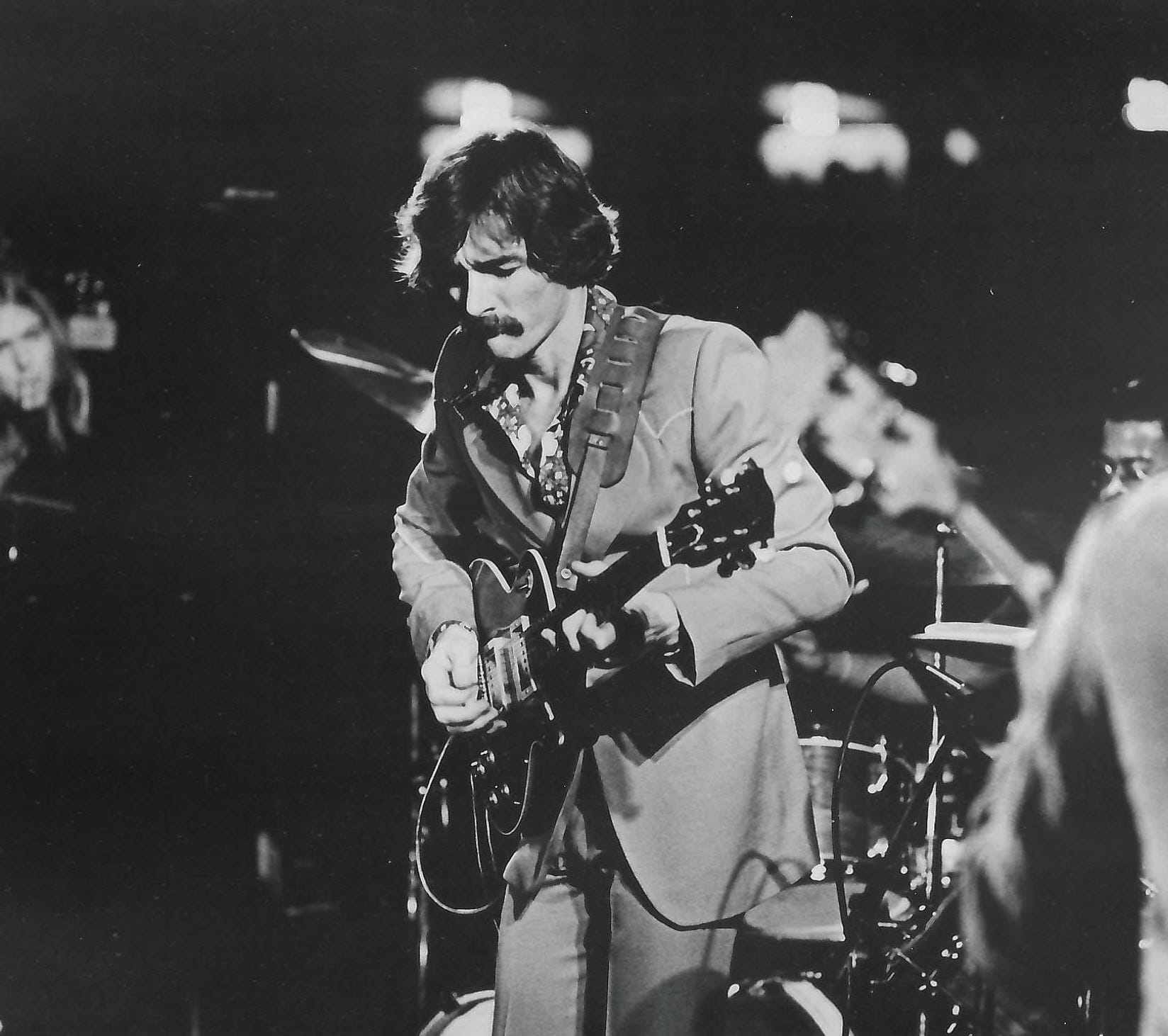
Dickey Betts~Guitar Player 1972
Here’s Betts on the influence jazz had on his own playing.
It’s like the blues background was right in there and then like Roland Kirk, Pharoah Sanders and John Coltrane kind of gave my music that far-out effect, and then adding that blues thing makes it a little more soulful than your jazz music.
The way it’s always worked out for us is that the music usually speaks for itself. When the right thing happens, then all of us can hear that that is the way it should be. When it’s right, we can hear it. Everybody’s got enough ear that we can tell the way it should follow.
Anytime I write something I try to keep that in mind—to have at least some time when we can get loose and go out and then bring it back to the basics. Gregg writes that way too, so that we don’t get tied down to a set little tune as much as the other groups do
That’s where our strength lies, in our improvising and free playing. If we just had to play straight tunes, we’d be no different from any other group.
Dickey Betts~Rolling Stone 1990
Dickey on the Allman Brothers Band’s jazz impulse.
It wasn’t that we consciously copied that music. It was just that later we realized that people like Coltrane and Adderley, or Coltrane and Pharoah Sanders, had been pursuing the same idea many years before. For a rock & roll band, though, it was a pretty new adventure. I mean, one of the good things about the Allman Brothers was, we listened to jazz and were influenced by it without ever pretending we were jazz players. But make no mistake: It was a matter of Duane being hip enough to see that potential and responding to it.9
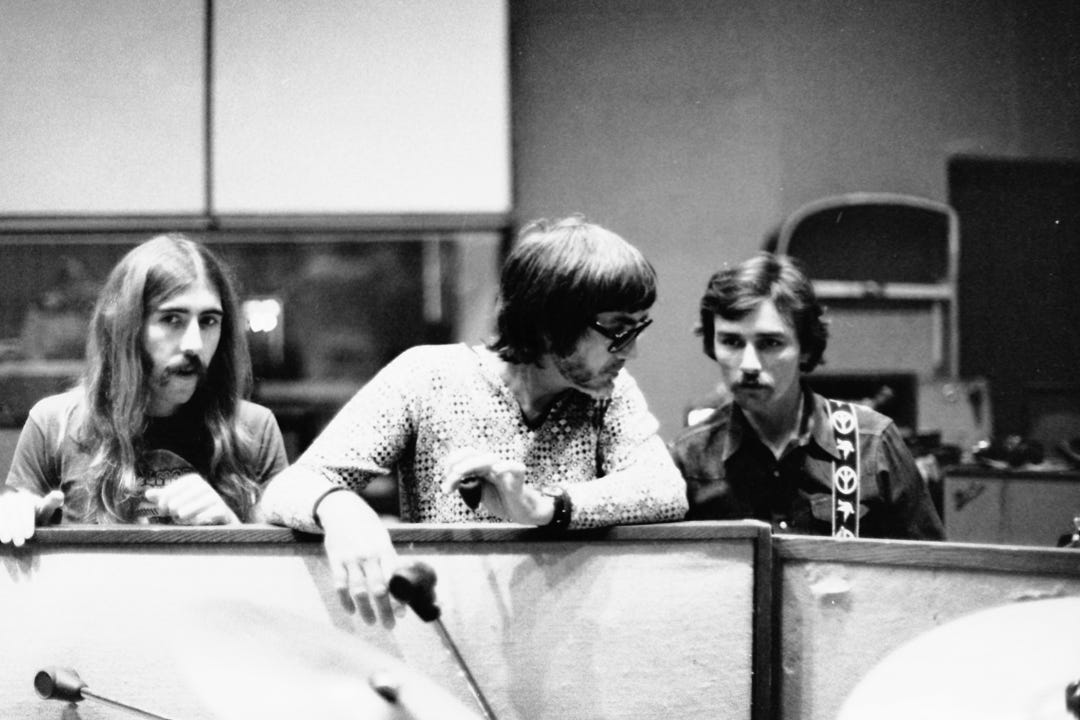
Tom Dowd~Swampland.com 2002
Producer Tom Dowd was with the band from the very beginning—a seventh member of the original band who helped shape their songs and arrangements into finely tuned takes on Idlewild South, At Fillmore East, and Eat a Peach. He offers a different take on jazz and the Allman Brothers Band sound, how Dowd used his jazz background to nurture the best from Dickey Betts.
Dickey was extremely sensitive to Django Reinhardt and Stephane Grappelli. He was sensitive to Grappelli particularly, if you listen on Idlewild South some of his solos start like the Grappelli violin solos and they start on low strings and go up, now all of a sudden he is a blues, jazz, rock guitar player. He never just jumped on it like that. He set a foundation and then slid into it.
I recognized that right away from my jazz sensitivity days and I could not say that to him for fear that I would upset him, so I choose to leave him alone, because what he is doing is beautiful. I would admire him and tell him that the way he started that solo is magnificent, and that what you are doing is great don’t change it, try and start everyone like that.
I would tell him to try and do every lick with that touch you have right now, because I never wanted to criticize him because I would send him off on a tangent that would take him a week to recover, but on the other hand, if you just stroked him, oh, he would come up with some exquisite playing.10

MUSHROOM MAGICIANS: Steve Marshall, Brent W. Hammond, Ken Lupson, Laura McCarty
PAID MEMBERS: Allen Barnes, Baileys Mike, sswoger, Bob Johnson, Bruce Miles, Buddy Lewis, Caroline Doolittle, Chuck Zumwalt, Clifford Morse, Craig Stephens, Dennis Newton, Denny, Ed Ashton, Ed Pokorny, F. D., Frank Young, Gary Wonwayout, Gary Williamson, George Holman, James Reynolds, James Yerrill, JD Guitar, Jeff Kushmerek, Jeff Schein, Jerry K, JoaquinDinero, Joe, Joe Sokohl, Joel Berger, Joel Tanzer, John Dolan, John Haughey, Jordan David, Joseph Lilly, Kenton Lee, Kevin Walker, Kurt Nielsen, Long Live the ABB, Mark Leitner, Martha Haynes, Peter Poulos, Phillip Page, Preston Root, Randy Woodall, Ray Tillman, Robert Porter, Rose Brandt, Surrender Cobra, Taylor Kropp, Tim Langan (Hot ‘Lanta Tim), Tina Christopher, Tom Pragliola, Tony Gioia, Wade McCurdy, Bob and Laura, Gary Smith, Wiszowa, Cwktwo, Hlnbkt, Cabinetsales, Art Dobie, Stanleyglennie8, Danbookin


Jimmy Carter. I’ve always loved this Walt McNamee shot of then-candidate Jimmy Carter in an Allman Brothers shirt. Carter is speaking to reporters July 4 weekend 1976, shortly after the band’s break-up and Gregg’s testimony in a federal drug case. I tagged the barn in the back with Long Live the ABB shroom 2 from Psychodelik Pete.
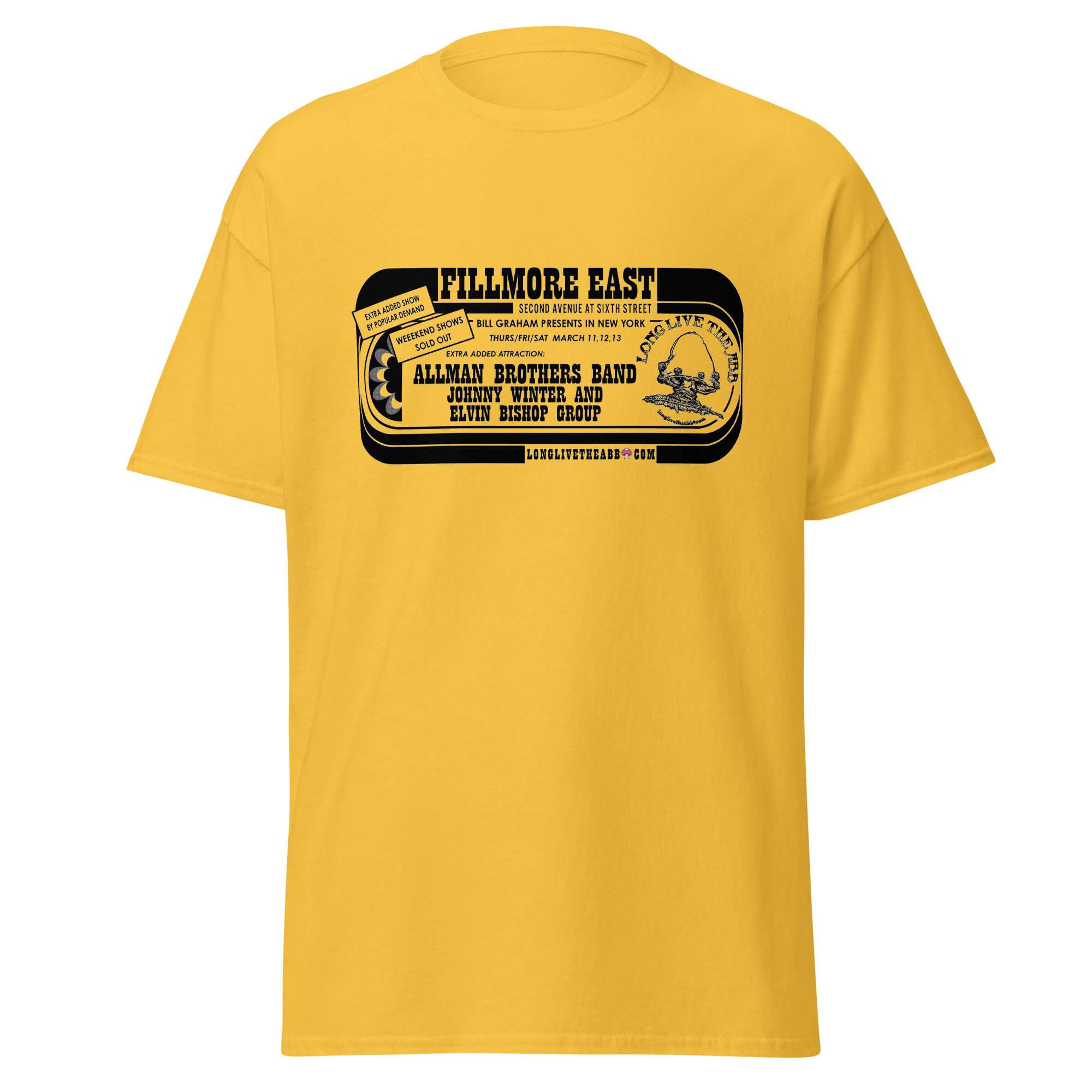
Fillmore East ad. This is an adaptation of an original newspaper advertisement for the original Fillmore East recording sessions. I replaced Johnny Winter’s face with the LLtABB shroom and moved the Allman Brothers to the TOP of the bill, a spot they EARNED after Johnny Winter demanded they switch places because he didn’t want to follow them.
“Kind of Blue Is More than the Best-Selling Album in Jazz History” https://www.longlivetheabb.com/p/kind-of-blue
Jaimoe interview, March 2009: https://www.youtube.com/watch?v=Wo-qqND1t5U
Alan Paul, One Way Out, 2014.
Kirk’s producer, Joel Dorn, tried to arrange a session with Duane, but the jazzman turned him down cold. “You want to put me with those rock & roll guys so I can make a hit. You’re not interested in my music.’ I said, ‘Nah, it’s different. This guy is special, man. He gets the joke. You really ought to ….’ But he wouldn’t do it. So, I went back and told Duane. I said, ‘I really tried, but you know Rahsaan.’ He said, ‘Yeah, I know, but it was worth trying.’” Source.
Crawdaddy 1970 https://www.duaneallman.info/amomentcapturedintime.htm
Jaimoe interview 1982: https://scottkfish.com/2016/01/08/jaimoe-the-decision-to-be-a-pro-musician/
That’s NFL Hall of Famer Lem Barney, https://en.wikipedia.org/wiki/Lem_Barney
Mikal Gilmore, Rolling Stone 1990: https://www.duaneallman.info/theallmanbrothers.htm
Tom Dowd interview 2002: http://swampland.com/articles/view/title:tom_dowd
Well put together article, Bob, thank you!!
Hi Bob, I have always thought that the amount of jazz influence on the Allmans playing is what set them apart from most other rock bands. It's like the blend of blues, country and jazz...which all come from the same roots...and a little classical is the "bitch's brew" of this band. They are a "muscular" blues, jazz, country boogie band. Oteil told they were the "hardest swinging rock band...EVER." ...and they all listened to each other in a highly developed way as an ensemble.