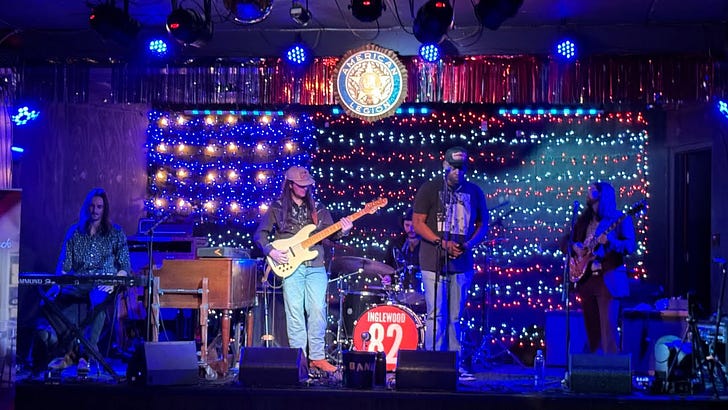
Episode Overview
Richard Josey and I have been in conversation for close to twenty years. He began his history career at Colonial Williamsburg as a pre-teen, portraying free and enslaved Africans well before we openly discussed the impact of interpretation of the enslaved experience on the interpreters themselves.
Richard built Collective Journeys as a practice for helping institutions move from transactional to relational. He coined my current favorite phrase Earth School and built his business around the question, What kind of ancestor will you be?1
Richard holds his ideals and values without preaching them—until a moment in the conversation when the full weight of what he has built lands without warning.
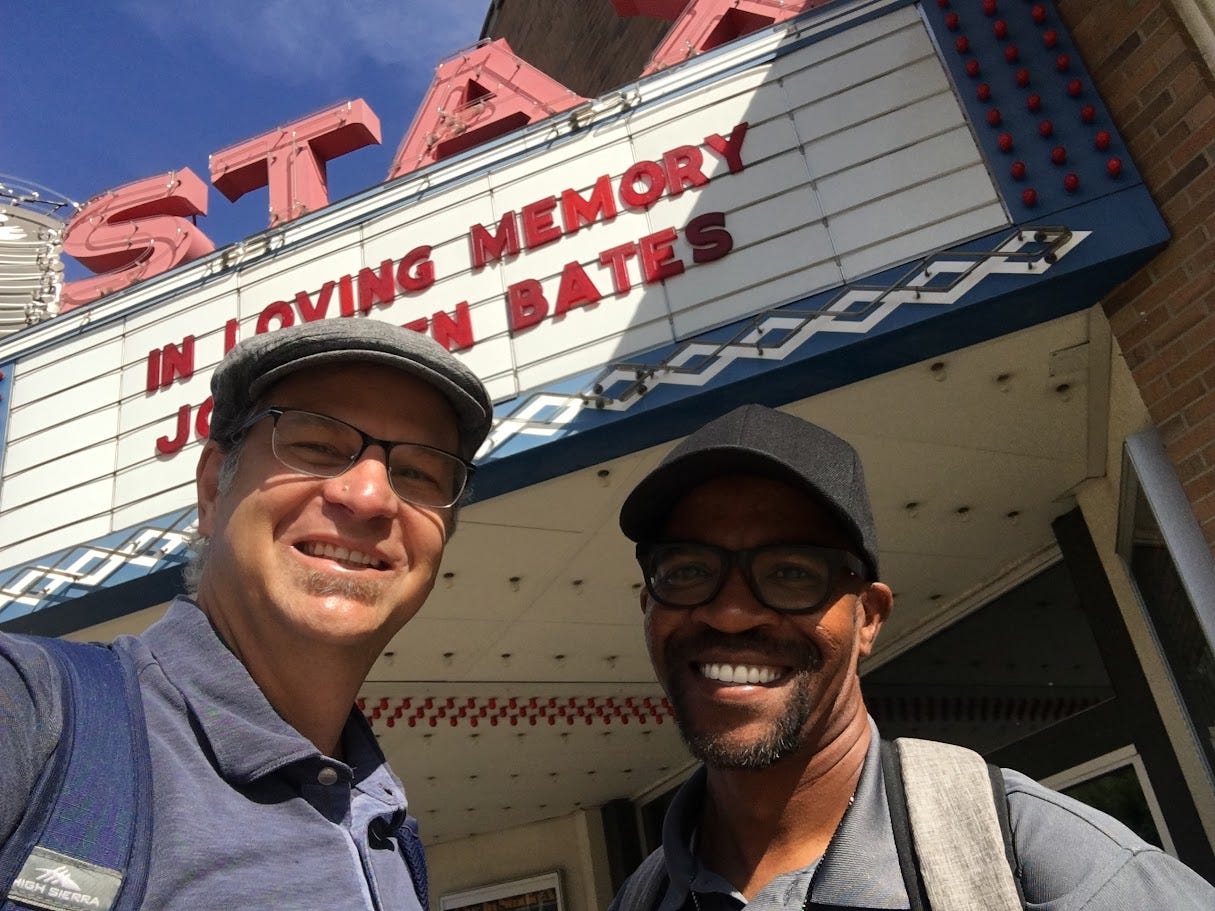
Our Crossroads
Richard and I have a lot of shared experience. We’re historians, southerners, history museum professionals, girldads, and Gen Xers who came up in the museum field at a moment when community truly came to the fore. We have had rough starts and gotten tighter because of them. History is our common language; intentionality our shared practice.
I wrote Play All Night during one of the hardest stretches of my life. Richard’s concept of the good ancestor was alive in me during that writing, even before I had the language for it. You cannot spend two years inside Duane Allman’s story without asking what kind of ancestor you intend to be.
The Conversation
We started with Outkast and the Dirty South—what that sound meant to a generation of Black Southerners who heard themselves in hip-hop for the first time. For Richard, it carried the sounds of the 70s—Bootsy, Parliament-Funkadelic, and the jams his mother played around the house. And of course, there are parallels to the Allman Brothers’ influence in the South in their own era.
We talked about Earth School—Richard’s concept that life is always in session, that the lessons do not stop, and that resistance only means you learn them harder later. He came to his ADHD diagnosis at fifty. He came to therapy late. Earth School is the framework he built for people ready to understand why they put the coat on.
The question underneath all of it came from Elder Dave Lewis of the Dakota Nation, “What kind of ancestor will you be?” Richard heard it at a conference and felt everything shift. He put it on a three-by-five card by his bed. It became T-shirts, mugs, canvas bags, a book chapter, a reorientation of his entire practice.
Intentionality is a big part of the Earth School toolkit, as is community, which Richard describes as something fluid, relational, internal. “You and I don’t talk every day,” he told me, “but you’re still core to my community.” Community doesn’t require constant presence. It requires showing up with intention when the moment comes.
We closed on belonging—why Richard moved away from DEI language not because he abandoned what it stands for but because he watched it get weaponized. Belonging is the end game. Inclusion is the mechanism. Representation matters and is also insufficient without intentionality.
History is liberation.
This episode brought to you by the paid members of LLtABB.
Upgrade now and support the Conversation from the Crossroads.

Resources
Bob Beatty, Play All Night: Duane Allman and the Journey to Fillmore East—https://www.amazon.com/dp/0813069505.
Richard Josey, Collective Journeys https://collectivejourneys.org
Anacostia Community Museum, Smithsonian Institution, https://anacostia.si.edu.
Drive-By Truckers, Dirty South (2004).
John H. Falk, Identity and the Museum Visitor Experience (2009).
Randi Korn, Intentional Practice for Museums (2018).
Outkast, “Jazzy Belle,” ATLiens (1996).
Susie Wilkening and James Chung, Life Stages of the Museum Visitor (2009).

That phrase inspired a chapter in my late friend Cinnamon Catlin Legutko’s book, The Inclusive Museum Leader (2021). Two years later, I gave a eulogy at her memorial service. Here’s more about Cinnamon and her impact on me.
Two Strong Legs and Even Wings to Fly

Thanks for reading Long Live the ABB: Conversation from the Crossroads of Southern music, history, and culture. Long Live the ABB is reader-supported. Consider becoming a free or paid subscriber.
Unique swag from LLtABB


Jimmy Carter. I’ve always loved this Walt McNamee shot of then-candidate Jimmy Carter in an Allman Brothers shirt. Carter is speaking to reporters July 4 weekend 1976, shortly after the band’s break-up and Gregg’s testimony in a federal drug case. I tagged the barn in the back with Long Live the ABB shroom 2 from Psychodelik Pete.
Fillmore East ad. This is an adaptation of an original newspaper advertisement for the original Fillmore East recording sessions. I replaced Johnny Winter’s face with the LLtABB shroom and moved the Allman Brothers to the TOP of the bill, a spot they EARNED after Johnny Winter demanded they switch places because he didn’t want to follow them.