Episode Overview
Sue Ferentinos and I have been friends for eighteen years. When I needed an editor for Play All Night!—someone I trusted, someone who came to the Allman Brothers completely fresh—she was the call I made. She gave me a sharp outside eye, a historian’s instincts, and the willingness to tell me when I’d hit it and how to make it better if I hadn’t. That collaboration shaped the book in ways I’m still thinking about. Our conversation picks up where that work left off.
Our Crossroads
Sue looks at the world the way I do—through history. We’re two historians rapping on the many ways the past carries meaning for, and belongs to, everyone. Our life’s work has been in the public sphere. Her particular expertise is in gender and sexuality, two topics very much underrepresented in history’s stories. We also each have extensive experience working with and for national professional organizations.
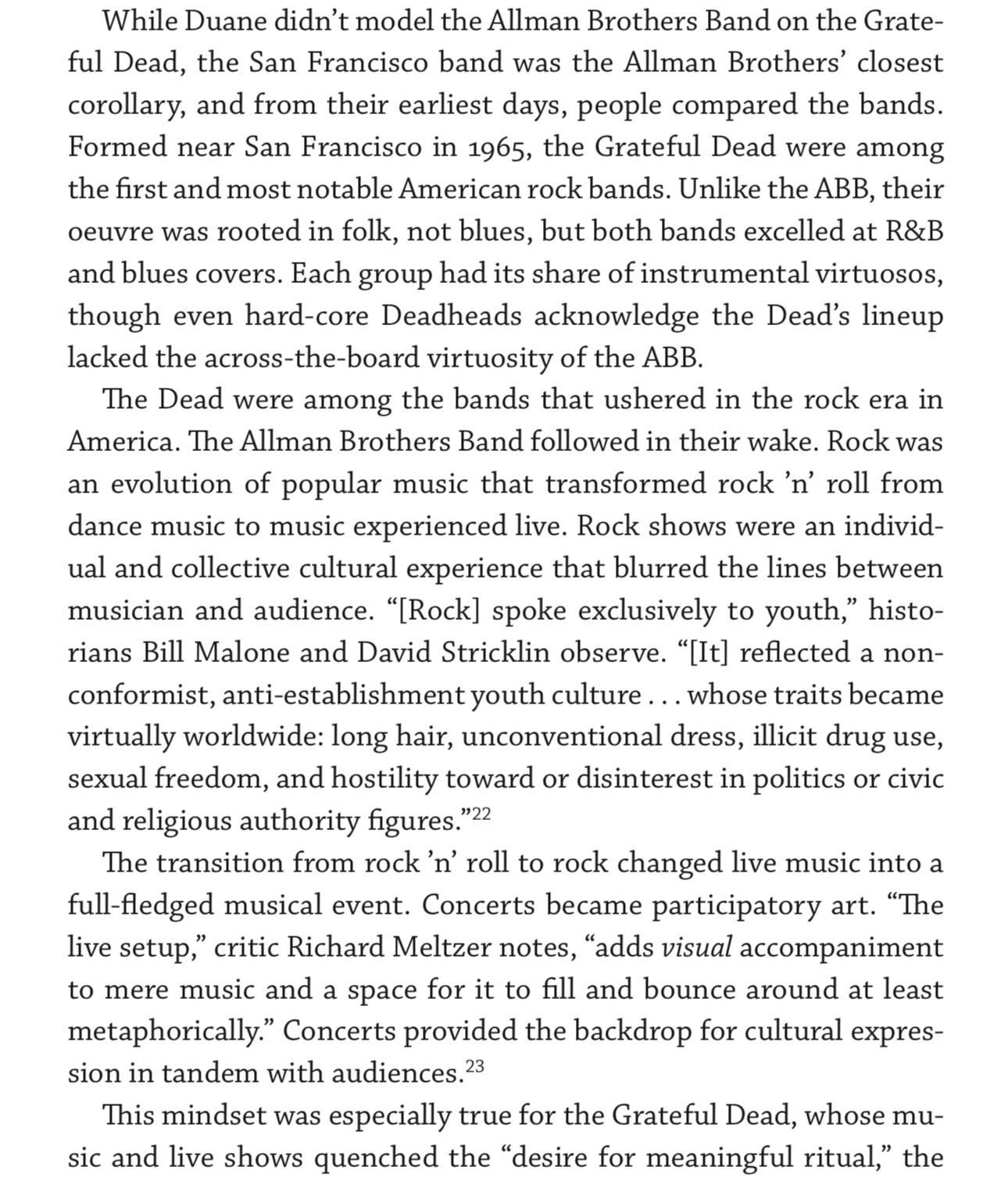
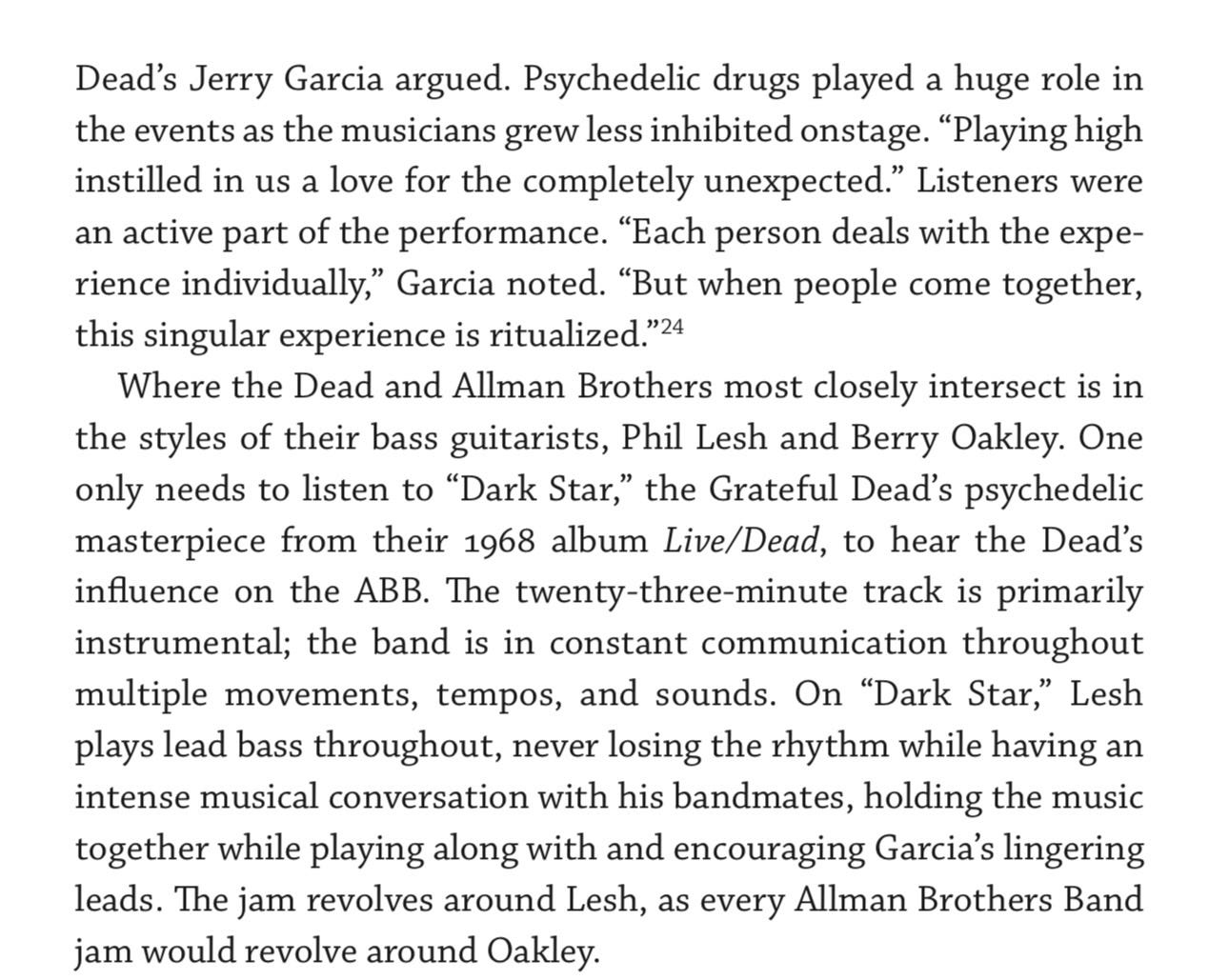
We are also each editors. I hired Sue to help me with the final pre-review Play All Night! manuscript in spring 2021. It was a bonus that she knew nothing about the Allman Brothers. Her comments validated my work as a historian and also my writing. She pushed me to clarity that the book benefited from—most notably in my comparison of the Dead and the Allman Brothers on pages 109-110, which are some of my favorite passages in the book, a place where I really felt I said something I theretofore was unable to articulate.1
The Conversation
You see the world more clearly when you finish a project like Play All Night. The book was the culmination of a thirty-year intellectual journey and my headspace changed for good and for the better.
I shared some insights I’d had since the book’s publication—particularly the gender implications of the band’s long hair as they toured the South in the 60s and early 70s.
I wrote a fair amount in the book about the challenges touring as an integrated band of hippies, but it was not a core part of my argument by any means. The music was always my focus. But Sue showed me, through my own writing, that it is impossible to ignore how far the ABB pushed the envelope on this issue, and how influential it was to those around them.
Southern men with long hair weren’t just flouting convention. They were triggering a specific kind of anxiety about gender roles, one that intersected at the crossroads of being integrated. The band were outsiders and outcasts as they toured because they posed a threat to the social order under which lay the ever-present threat of violence.
From there we went deeper into Sue’s expertise. She shared how the 1950s were a period of moral retrenchment and traced how that set up the 1960s counterculture explosion that Duane and his bandmates were a part of. (Another area she pushed me on in my manuscript.) Young men weren’t just growing their hair long. They were rejecting the entire architecture of traditional gender roles their parents had idealized
Our conversation moved to one of my favorite topics: public memory. Sue noted that historical markers don’t require people to opt in. They sit in the landscape, waiting. Sometimes someone reads one and learns something.
We came around to the present. Sue spoke plainly about what she sees happening at the federal level—the effort to narrow the history the country gets told. Her argument was careful and clear: it’s not about avoiding controversy. It’s about telling real history, which is complex, which is contested, and which belongs to everyone who’s ever lived it.
She closed with something worth sitting with. History taught her she wasn’t alone. Queer people existed in the past. Women existed in the past. So have immigrants. When she found their stories, it changed what she thought was possible. That’s the work—the accumulating evidence that people have always found ways through.
As I often say, history is liberating.
Resources
Bob Beatty, Play All Night: Duane Allman and the Journey to Fillmore East (University Press of Florida, 2022). https://www.amazon.com/dp/0813069505.
Susan Ferentinos
Interpreting LGBT History at Museums and Historic Sites (2014)
Little Richard: I Am Everything (2023).
Brought to you by the paid members of the Long Live the ABB community, who receive previews of new Conversation from the Crossroads episodes.
🍄MUSHROOM🍄MAGICIANS🍄 Steve Marshall, Brent W. Hammond, Ken Lupson, Laura McCarty
🍑 PEACH 🍑 PALS 🍑 Allen Barnes, Art Dobie, Baileys Mike, Bob and Laura, Bob Johnson, Brent Pruner, Bruce Miles, Buddy Lewis, Cabinetsales, Caroline Doolittle, charlie2541, Chuck Zumwalt, Clifford Morse, Craig Stephens, Cwktwo, Danbookin, Dennis Newton, Denny, Ed Ashton, Ed Pokorny, F. D., Frank Young, Gary Nagle/Chairman Wonwayout, Gary Smith, Gary Williamson, George Holman, Hlnbkt, Irishbeatz, James Reynolds, James Yerrill, Jcsarphie, JD Guitar, Jeff Kushmerek, Jeff Schein, Jerry K, JoaquinDinero, Joe Sokohl, Joel Berger, Joel Tanzer, John Delaney, John Dolan, John Haughey, Jordan David, Joseph Lilly, Kenton Lee, Kevin Harper, Kevin Walker, Kurt Nielsen, Mark Leitner, Martha Haynes, Mike Clark, Peter Poulos, Phillip Page, Preston Root, Randy Woodall, Ray Tillman, Robert Porter, Rose Brandt, sswoger, Stanleyglennie8, Surrender Cobra, Taylor Kropp, Tim Langan (Hot ‘Lanta Tim), Tina Christopher, Tom Pragliola, Tony Gioia, Wade McCurdy, Wiszowa

Including these here as they are some of my favorite paragraphs in the book. I’m particularly proud of the “Dark Star” section. It came to me late at night in the middle of a writing frenzy.